Boeing 777X – Boeing's Next-Generation Flagship Wide-Body
Discover the Boeing 777X family featuring the world's largest composite wing, folding wingtips, GE9X engines and next-generation long-haul technology.
- First flight
- 25 January 2020
- Introduced
- Planned after certification
- Number built
- Limited pre-production and test aircraft
- Range
- 13,500 km (7,285 nautical miles)

Introduction
Overview
The Boeing 777X is Boeing's newest generation of long-range wide-body aircraft, developed as the successor to the highly successful Boeing 777-300ER. Building upon the proven Boeing 777 platform, the Boeing 777X incorporates an all-new composite wing, folding wingtips, General Electric GE9X engines, advanced flight deck technologies and improved passenger comfort.
Designed to compete directly with the Airbus A350 family, the Boeing 777X offers increased fuel efficiency, lower operating costs, greater passenger capacity and extended range compared with previous Boeing 777 models.
The family consists of the Boeing 777-8, Boeing 777-9 and the Boeing 777-8 Freighter, combining next-generation aerodynamics, lightweight materials and advanced systems to serve airlines on ultra-long-haul routes.
Once certified, the Boeing 777X will become the world's largest twin-engine commercial aircraft, continuing Boeing's leadership in long-range aviation.
At a glance
- Type
- Wide-body Twin-Engine Jet Airliner
- Role
- Ultra Long-Range Wide-Body Passenger and Cargo Airliner
- Programme status
- Flight Testing / Certification
- Production
- 2017–Present
Primary operators
History
Boeing officially launched the Boeing 777X programme in 2013 in response to growing airline demand for a more efficient replacement for older Boeing 747 and Boeing 777 fleets.
The programme retained the proven Boeing 777 fuselage while introducing major technological improvements including the largest composite wing ever installed on a commercial aircraft, folding wingtips for airport compatibility and the new General Electric GE9X engine.
The Boeing 777X completed its maiden flight on 25 January 2020. Since then, Boeing has continued an extensive certification programme involving multiple flight-test aircraft to validate aircraft systems, performance and safety before entry into commercial service.
The Boeing 777X has accumulated hundreds of orders from leading international airlines and is expected to become Boeing's flagship long-haul aircraft for the coming decades.
Development
The Boeing 777X programme represents the largest redesign of the Boeing 777 family since its original introduction.
Engineers developed a completely new carbon-fibre reinforced polymer wing featuring folding wingtips that extend the wingspan during flight while allowing compatibility with existing airport gates on the ground.
The programme also introduced the General Electric GE9X engine, larger composite structures, improved cabin pressurization, lower cabin altitude, larger windows, modern flight deck displays and enhanced operational efficiency.
These innovations allow the Boeing 777X to achieve significantly lower fuel burn and emissions while carrying more passengers over longer distances than previous Boeing 777 variants.
Milestones
Programme Timeline
First flight
25 January 2020
Entered service
Planned after certification
Production
2017–Present
Retirement
Not Applicable
Current status
Certification and production
Aircraft Design
The Boeing 777X features the largest composite wing ever developed for a commercial aircraft. Manufactured primarily from carbon-fibre reinforced polymer, the wing provides exceptional aerodynamic efficiency while reducing structural weight.
Its most distinctive feature is the folding wingtip system, allowing the aircraft to use airport gates originally designed for smaller aircraft while maximizing wingspan during flight.
The wider cabin incorporates redesigned sidewalls, larger overhead bins, improved humidity control, lower cabin altitude and larger windows inspired by the Boeing 787 Dreamliner.
The aircraft also includes advanced noise reduction technologies and highly optimized aerodynamics to improve passenger comfort and airline operating economics.
Cockpit
The Boeing 777X flight deck builds upon the Boeing 777 while incorporating technologies derived from the Boeing 787 Dreamliner.
Cockpit features include:
- Large Landscape LCD Displays
- Touchscreen Flight Management Interface
- Electronic Checklists
- Fly-by-Wire Flight Controls
- Dual Flight Management Computers
- Enhanced Weather Radar
- Synthetic Vision Capability
- Head-Up Display (optional)
- Advanced EICAS
- ADS-B
- Satellite Communications
- Electronic Flight Bag Integration
The cockpit maintains commonality with previous Boeing 777 aircraft while introducing modern digital interfaces that reduce pilot workload.
Cabin
The Boeing 777X introduces Boeing's next-generation passenger cabin with improved comfort throughout every class.
Cabin features include:
- Wider cabin architecture
- Larger overhead storage bins
- Larger passenger windows
- LED mood lighting
- Improved humidity
- Lower cabin altitude
- Quieter cabin environment
- Advanced environmental control system
- Multiple premium seating layouts
The Boeing 777-9 typically accommodates approximately 426 passengers in a standard two-class configuration while offering airlines considerable cabin flexibility.
Engines
The Boeing 777X is powered exclusively by the General Electric GE9X, the world's most advanced commercial aircraft engine.
The GE9X incorporates:
- Composite fan blades
- Ceramic Matrix Composite components
- Advanced combustor technology
- High bypass ratio
- Large composite fan
- Reduced emissions
- Lower fuel consumption
- Lower maintenance costs
Producing approximately 105,000 pounds of thrust, the GE9X provides exceptional fuel efficiency while meeting stringent international environmental standards.
Flight Controls
The Boeing 777X utilizes a fully digital fly-by-wire flight control system derived from the Boeing 777 and enhanced with next-generation flight control computers, improved automation and advanced flight envelope protection.
The aircraft also incorporates electronically controlled folding wingtips, which automatically lock before takeoff and landing while remaining fully monitored by redundant safety systems.
Avionics
The Boeing 777X incorporates Boeing's latest integrated avionics suite featuring large landscape displays, advanced flight management systems, synthetic vision capability, ADS-B, satellite communications, enhanced weather radar, electronic flight bags and predictive aircraft health monitoring.
The avionics architecture shares many technologies with the Boeing 787 Dreamliner while introducing new digital capabilities for long-haul operations.
Landing Gear
The Boeing 777X uses an upgraded retractable tricycle landing gear with a twin-wheel nose gear and six-wheel main landing gear assemblies. Improvements to braking systems, steering and structural components support the aircraft's increased maximum takeoff weight while maintaining compatibility with existing airport infrastructure.
Performance
The Boeing 777X has been engineered to deliver industry-leading efficiency on ultra-long-haul routes.
Typical design performance includes:
- Cruise Speed: Mach 0.84
- Maximum Speed: Mach 0.89
- Service Ceiling: 43,100 ft
- Range: Up to approximately 16,170 km depending on variant
The combination of GE9X engines, composite wings and advanced aerodynamics is expected to reduce fuel burn and operating costs compared with previous Boeing 777 models.
Maintenance
The Boeing 777X incorporates predictive maintenance systems, advanced onboard diagnostics, modular aircraft systems and real-time health monitoring. Composite structures are designed to reduce corrosion and fatigue inspections while improving long-term reliability.
These features are intended to reduce maintenance costs and improve aircraft availability throughout the service life.
Safety
The Boeing 777X incorporates multiple redundant fly-by-wire computers, advanced flight envelope protection, TCAS II, Enhanced GPWS, predictive windshear detection, modern weather radar, advanced fire detection and suppression systems, emergency oxygen systems, cockpit voice recording and flight data recording.
The aircraft is undergoing one of Boeing's most comprehensive certification programmes to meet current international airworthiness and safety standards prior to entry into commercial service.
Reference
Technical Specifications
Full dimensional, weight, powerplant and performance data.
Crew & capacity
- Crew
- 2 (Captain and First Officer) + Cabin Crew
- Passengers
- 426 (Typical Two-Class), up to 550 in high-density configuration
Dimensions
- Length
- 76.72 m (251 ft 9 in)
- Wingspan
- 71.75 m (235 ft 5 in) in flight, 64.85 m (212 ft 9 in) folded on ground
- Height
- 19.74 m (64 ft 9 in)
- Fuselage width
- 6.20 m (20 ft 4 in)
- Cabin width
- 5.86 m (19 ft 3 in)
- Wheelbase
- 32.20 m (105 ft 8 in)
Weights
- Empty weight
- Approximately 188,200 kg (415,000 lb)
- Operating weight
- Approximately 188,700 kg (416,000 lb)
- Max takeoff weight
- 351,534 kg (775,000 lb)
- Max landing weight
- Approximately 260,000 kg (573,000 lb)
- Max payload
- Approximately 73,000 kg (160,900 lb)
- Fuel capacity
- Approximately 198,000 L (52,300 US gal)
Powerplant
- Engines
- 2 × General Electric GE9X High-Bypass Turbofan Engines
- Engine manufacturer
- General Electric
- Engine model
- GE9X
- Thrust
- 105,000 lbf (467 kN) each
Performance
- Maximum speed
- 954 km/h (Mach 0.89)
- Cruise speed
- 905 km/h (Mach 0.84)
- Stall speed
- Approximately 250 km/h (135 knots)
- Range
- 13,500 km (7,285 nautical miles)
- Service ceiling
- 43,100 ft (13,140 m)
- Rate of climb
- Approximately 2,500 ft/min (762 m/min)
- Takeoff distance
- Approximately 3,200 m (10,500 ft)
- Landing distance
- Approximately 2,100 m (6,890 ft)
Fuel & operating limits
- Fuel consumption
- Expected to be approximately 10% lower than the Boeing 777-300ER on comparable missions
- Endurance
- Up to 17 hours
- Maximum altitude
- 43,100 ft
- Max operating Mach
- Mach 0.89
- Runway requirement
- Typically 3,000–3,500 m depending on aircraft weight and environmental conditions
Programme
- First flight
- 25 January 2020
- Introduction
- Planned after certification
- Production years
- 2017–Present
- Number built
- Limited test and production aircraft
- Unit cost
- Estimated US$442 million (777-9 list price)
Variants
Boeing 777-8
Ultra-long-range passenger variant designed for routes exceeding 16,000 km with exceptional fuel efficiency.
Boeing 777-9
The largest passenger aircraft in the Boeing 777X family featuring increased seating capacity, composite wings and GE9X engines.
Boeing 777-8 Freighter
Next-generation long-range cargo aircraft combining the payload capability of the Boeing 747 Freighter with the operating efficiency of the Boeing 777X platform.
Major Operators
- Emirates
- Qatar Airways
- Lufthansa
- Singapore Airlines
- Cathay Pacific
- ANA
- British Airways
- Etihad Airways
- Korean Air
- All Nippon Airways
- Qantas
- Cargolux (777-8 Freighter order)
- Qatar Airways Cargo
- Silk Way West Airlines
- Air India (orders)
Advantages & Limitations
Advantages
- Largest twin-engine commercial aircraft ever developed.
- Advanced carbon-fibre composite wing with folding wingtips.
- Outstanding fuel efficiency compared with previous-generation aircraft.
- Powerful and efficient General Electric GE9X engines.
- Lower operating costs than comparable four-engine aircraft.
- Improved passenger comfort with larger windows and lower cabin altitude.
- Exceptional ultra-long-range capability.
- Advanced digital flight deck derived from the Boeing 787.
- Reduced maintenance requirements through predictive health monitoring.
- Excellent compatibility with existing airport infrastructure despite its large wingspan.
Limitations
- Certification programme has experienced delays.
- Higher acquisition cost than previous Boeing 777 variants.
- Requires specialized maintenance for composite wing structures.
- Large passenger capacity may not suit lower-demand routes.
- Limited operational experience prior to widespread airline service.
- Higher airport handling requirements due to aircraft size.
- Complex folding wingtip mechanism increases system complexity.
- Faces strong competition from the Airbus A350-1000.
- Initial production rates are relatively low.
- Entry into service depends on certification approval.
Interesting Facts
- The Boeing 777X features the largest composite wing ever installed on a commercial aircraft.
- It is the first Boeing commercial aircraft equipped with folding wingtips.
- The GE9X is one of the most advanced commercial turbofan engines ever developed.
- The Boeing 777X flight deck incorporates technologies from the Boeing 787 Dreamliner.
- Its cabin features larger windows than previous Boeing 777 models.
- The Boeing 777-9 is longer than the Boeing 747-400 passenger aircraft.
- Composite wings improve aerodynamic efficiency while reducing weight.
- The aircraft maintains compatibility with existing airport gates through its folding wingtip design.
- The Boeing 777X programme builds upon more than two decades of Boeing 777 operational experience.
- The 777-8 Freighter is expected to become one of the world's most capable long-range cargo aircraft.
- The aircraft incorporates predictive maintenance technology for improved fleet availability.
- The Boeing 777X is designed to reduce fuel burn and carbon emissions compared with earlier Boeing 777 variants.
- Large landscape cockpit displays replace many traditional flight deck controls.
- Extensive use of digital design and simulation accelerated aircraft development.
- The Boeing 777X is expected to become Boeing's flagship long-haul commercial aircraft.
Comparison
Versus the Airbus A350-1000
- The Boeing 777X features folding composite wingtips, while the Airbus A350-1000 has fixed composite wings.
- The Boeing 777-9 typically offers greater passenger capacity than the Airbus A350-1000.
- The Airbus A350 uses Rolls-Royce Trent XWB engines, while the Boeing 777X uses General Electric GE9X engines.
- The Boeing 777X retains the proven Boeing 777 fuselage with significant technological upgrades.
- The Airbus A350 entered commercial service earlier than the Boeing 777X.
- The Boeing 777X offers excellent commonality for existing Boeing 777 operators.
- Both aircraft families emphasize lower fuel consumption, reduced emissions and advanced composite structures.
- The Boeing 777-8 Freighter is intended to replace many aging Boeing 747 freighters.
Interactive
Explore the Aircraft
Hover or tap a marker to identify each major part of the aircraft.
Select a marker to learn about each part of the aircraft.
Gallery

Side profile of the Boeing 777X highlighting its extended composite wing and distinctive folding wingtips. 
Next-generation Boeing 777X flight deck featuring large landscape displays and Boeing 787-inspired avionics. 
Modern Boeing 777X passenger cabin with larger windows, improved humidity and enhanced passenger comfort. 
General Electric GE9X turbofan engine, one of the most advanced and efficient commercial aircraft engines ever developed. 
Boeing 777X during landing with its six-wheel main landing gear and folding wingtips locked for flight.
Frequently Asked Questions
Recommended Products
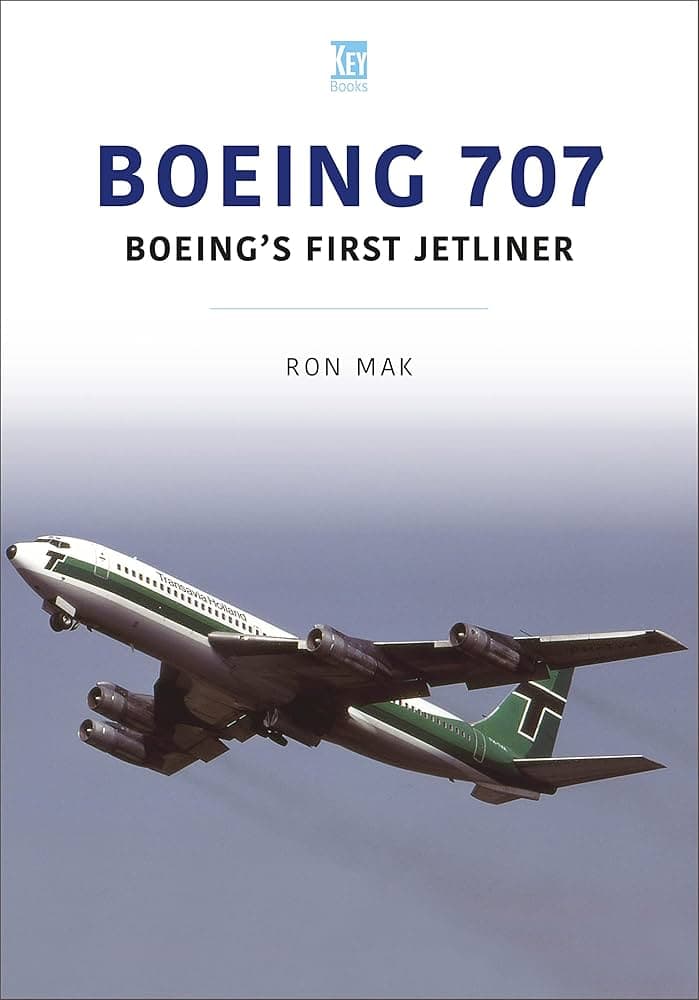
Boeing 707 History Book
Comprehensive reference covering the design, development and operational history of the Boeing 707.
Buy now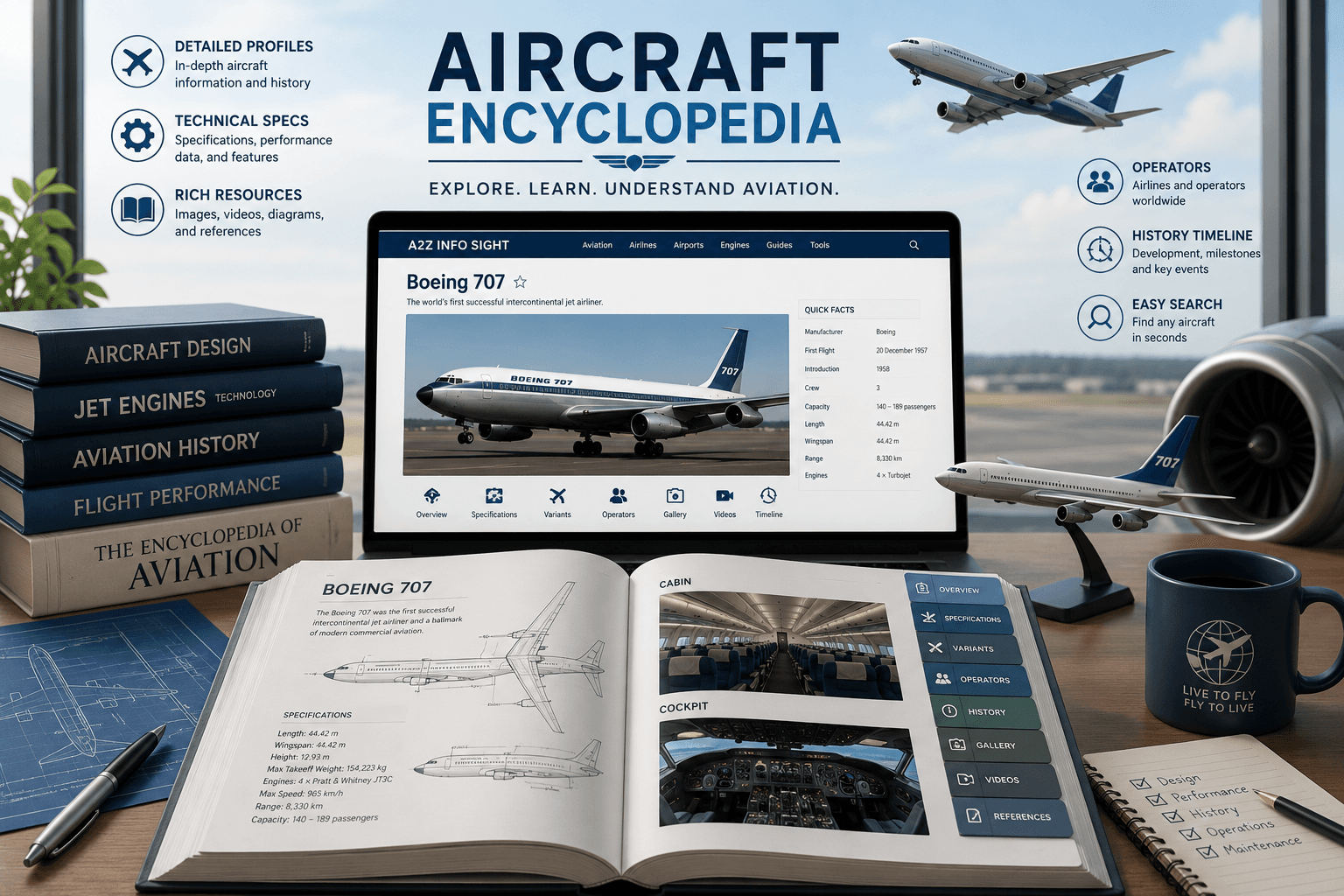
Commercial Aircraft Encyclopedia
A detailed guide covering classic and modern commercial aircraft.
Buy now


As an affiliate, A2Z InfoSight may earn from qualifying purchases.
References
Keep exploring


