Boeing 777 – The World's Largest Twin-Engine Airliner
Discover the Boeing 777 family, famous for its GE90 engines, exceptional reliability, long-range capability and industry-leading ETOPS performance.
- First flight
- 12 June 1994
- Introduced
- 7 June 1995 (United Airlines)
- Number built
- 1,800+
- Range
- 13,650 km (7,370 nautical miles)

Introduction
Overview
The Boeing 777, commonly known as the "Triple Seven," is one of the most successful long-range wide-body commercial aircraft ever built. Designed to bridge the gap between the Boeing 767 and Boeing 747, the Boeing 777 combines exceptional passenger capacity, fuel efficiency and long-range capability while operating with only two engines.
The Boeing 777 became the world's largest twin-engine passenger aircraft and introduced numerous technological advancements including a fully digital fly-by-wire flight control system, large LCD flight displays, advanced avionics and the powerful General Electric GE90 engine, which remains the most powerful commercial aircraft engine ever certified.
The family includes the Boeing 777-200, 777-200ER, 777-200LR, 777-300, 777-300ER and the Boeing 777 Freighter. These aircraft serve airlines, cargo operators and government organizations across every continent.
Today the Boeing 777 remains one of the world's premier long-haul aircraft and continues in production alongside the next-generation Boeing 777X family.
At a glance
- Type
- Wide-body Twin-Engine Jet Airliner
- Role
- Long-Range Wide-Body Passenger and Cargo Airliner
- Programme status
- In Production
- Production
- 1993–Present
Primary operators
History
During the late 1980s, Boeing identified the need for a new long-range wide-body aircraft capable of replacing aging DC-10s, Lockheed L-1011 TriStars and supplementing the Boeing 747 on many routes.
Unlike earlier Boeing programmes, the Boeing 777 was designed using extensive collaboration with major international airlines. Carriers such as United Airlines, ANA, British Airways and Japan Airlines participated directly in defining aircraft requirements.
The Boeing 777 completed its maiden flight on 12 June 1994 and entered commercial service with United Airlines on 7 June 1995.
The Boeing 777-300ER later became the family's most successful variant due to its remarkable fuel efficiency, long range and operating economics. The aircraft gradually replaced many Boeing 747 passenger fleets worldwide.
Development
The Boeing 777 programme represented a major technological leap for Boeing. It became the company's first commercial aircraft designed entirely using computer-aided design (CAD) without full-scale physical mockups.
Engineers introduced fly-by-wire flight controls, a fully digital cockpit, advanced composite structures, large high-efficiency wings and next-generation propulsion systems.
The Boeing 777 family later expanded with ultra-long-range and cargo variants including the Boeing 777-200LR and Boeing 777 Freighter. Continuous improvements eventually led to development of the Boeing 777X, incorporating composite wings and folding wingtips while retaining the proven Boeing 777 design philosophy.
Milestones
Programme Timeline
First flight
12 June 1994
Entered service
7 June 1995 (United Airlines)
Production
1993–Present
Retirement
Passenger, cargo and government operations continue worldwide
Current status
Passenger, cargo, government and military operations
Aircraft Design
The Boeing 777 features a wide-body twin-aisle fuselage optimized for long-haul operations. Its large supercritical wing provides exceptional aerodynamic efficiency while supporting high payload capability and long-range performance.
The aircraft incorporates extensive use of advanced aluminium alloys and composite materials to reduce structural weight while maintaining exceptional strength.
Its spacious fuselage supports multiple seating configurations, generous cargo volume and airline-specific premium cabin layouts. The Boeing 777's large wing and powerful engines enable excellent takeoff performance despite its substantial maximum takeoff weight.
The Boeing 777 also introduced folding passenger cabin architecture, advanced environmental control systems and highly efficient wing aerodynamics that continue to influence later Boeing aircraft designs.
Cockpit
The Boeing 777 introduced one of the world's most advanced commercial flight decks featuring a fully digital glass cockpit and fly-by-wire controls.
Typical cockpit equipment includes:
- Six large LCD Flight Displays
- Dual Flight Management Computers
- Fly-by-Wire Flight Controls
- Electronic Checklists
- Engine Indication and Crew Alerting System (EICAS)
- Weather Radar
- TCAS II
- Enhanced GPWS
- GPS Navigation
- Satellite Communications
- ADS-B capability
- Head-Up Display (operator dependent)
The cockpit was designed to reduce pilot workload while improving situational awareness during long-haul operations.
Cabin
The Boeing 777 offers one of the widest passenger cabins of any commercial aircraft, accommodating approximately 301 to 550 passengers depending on variant and airline configuration.
Cabin features include:
- Twin-aisle wide-body layout
- Spacious overhead storage bins
- Multiple seating classes
- Premium First and Business Class suites
- Modern LED cabin lighting on refurbished aircraft
- Advanced cabin pressurization
- Quiet passenger environment
- Large cargo compartments
The aircraft's generous cabin width provides airlines with flexible seating arrangements and improved passenger comfort on ultra-long-haul flights.
Engines
The Boeing 777 is powered by two of the world's largest and most powerful commercial turbofan engines.
Available engine families include:
- General Electric GE90
- Pratt & Whitney PW4000
- Rolls-Royce Trent 800
The GE90-115B powering the Boeing 777-300ER produces approximately 115,300 pounds of thrust, making it the most powerful commercial aircraft engine ever certified.
These engines deliver exceptional fuel efficiency, outstanding reliability and industry-leading ETOPS capability for long-range international operations.
Flight Controls
The Boeing 777 became Boeing's first commercial aircraft to employ a fully digital fly-by-wire flight control system. Pilot inputs are transmitted electronically to flight control computers, which optimize aircraft response while maintaining envelope protection and excellent handling characteristics.
Avionics
The Boeing 777 features an advanced integrated avionics suite including large LCD flight displays, dual Flight Management Systems, EICAS, weather radar, TCAS II, Enhanced GPWS, GPS navigation, ADS-B capability, satellite communications and comprehensive aircraft health monitoring.
Landing Gear
The Boeing 777 employs a robust retractable tricycle landing gear featuring a twin-wheel nose gear and two six-wheel main landing gear assemblies. This configuration supports extremely high operating weights while providing excellent runway performance and braking capability.
Performance
The Boeing 777 delivers exceptional long-range performance and operating efficiency.
Typical performance includes:
- Cruise Speed: Mach 0.84
- Maximum Speed: Mach 0.89
- Service Ceiling: 43,100 ft
- Range: Up to approximately 17,395 km depending on variant
Its combination of fuel efficiency, payload capability and ETOPS certification has made it one of the world's most successful long-haul airliners.
Maintenance
The Boeing 777 incorporates modular systems, advanced onboard diagnostics and predictive maintenance capabilities. Airlines perform scheduled A, C and heavy maintenance checks together with engine inspections, landing gear overhauls, avionics diagnostics and structural inspections.
Its exceptional dispatch reliability has made the Boeing 777 a preferred aircraft for airlines operating demanding long-haul schedules.
Safety
The Boeing 777 incorporates multiple redundant flight-critical systems including triple-redundant fly-by-wire computers, hydraulic and electrical redundancies, TCAS II, Enhanced GPWS, advanced weather radar, emergency oxygen systems, fire detection and suppression systems, cockpit voice recording and flight data recording.
The aircraft has established one of the strongest safety records among modern long-haul commercial aircraft and continues to meet evolving international certification standards.
Reference
Technical Specifications
Full dimensional, weight, powerplant and performance data.
Crew & capacity
- Crew
- 2 (Captain and First Officer) + Cabin Crew
- Passengers
- 365–550 passengers depending on airline configuration
Dimensions
- Length
- 73.90 m (242 ft 4 in)
- Wingspan
- 64.80 m (212 ft 7 in)
- Height
- 18.50 m (60 ft 8 in)
- Fuselage width
- 6.20 m (20 ft 4 in)
- Cabin width
- 5.86 m (19 ft 3 in)
- Wheelbase
- 30.50 m (100 ft)
Weights
- Empty weight
- Approximately 167,800 kg (369,900 lb)
- Operating weight
- Approximately 168,600 kg (371,700 lb)
- Max takeoff weight
- 351,535 kg (775,000 lb)
- Max landing weight
- 251,290 kg (554,000 lb)
- Max payload
- Approximately 68,000 kg (150,000 lb)
- Fuel capacity
- 181,280 L (47,890 US gal)
Powerplant
- Engines
- 2 × High-Bypass Turbofan Engines
- Engine manufacturer
- General Electric / Pratt & Whitney / Rolls-Royce
- Engine model
- GE90-115B / PW4098 / Trent 892
- Thrust
- 98,000–115,300 lbf (436–513 kN) each
Performance
- Maximum speed
- 950 km/h (Mach 0.89)
- Cruise speed
- 905 km/h (Mach 0.84)
- Stall speed
- Approximately 250 km/h (135 knots)
- Range
- 13,650 km (7,370 nautical miles)
- Service ceiling
- 43,100 ft (13,140 m)
- Rate of climb
- Approximately 2,500 ft/min (762 m/min)
- Takeoff distance
- Approximately 3,000 m (9,840 ft)
- Landing distance
- Approximately 2,000 m (6,560 ft)
Fuel & operating limits
- Fuel consumption
- Approximately 7,500–8,500 L/hour depending on payload and flight profile
- Endurance
- Up to 17 hours
- Maximum altitude
- 43,100 ft
- Max operating Mach
- Mach 0.89
- Runway requirement
- Typically 2,800–3,300 m depending on aircraft weight and environmental conditions
Programme
- First flight
- 12 June 1994
- Introduction
- 7 June 1995 (United Airlines)
- Production years
- 1993–Present
- Number built
- 1,800+
- Unit cost
- Approximately US$375 million (777-300ER list price)
Variants
Boeing 777-200
The original production model designed for medium- and long-range international routes.
Boeing 777-200ER
Extended Range version offering significantly greater range and payload capability than the original Boeing 777-200.
Boeing 777-200LR
Ultra-long-range variant capable of some of the world's longest commercial flights.
Boeing 777-300
Stretched fuselage version providing increased passenger capacity for high-demand routes.
Boeing 777-300ER
The most successful Boeing 777 variant featuring GE90-115B engines, increased range and outstanding fuel efficiency.
Boeing 777 Freighter (777F)
Dedicated cargo aircraft based on the Boeing 777-200LR platform offering exceptional payload capability and long-range freight operations.
Major Operators
- Emirates
- Qatar Airways
- Singapore Airlines
- Cathay Pacific
- ANA
- Japan Airlines
- Air France
- British Airways
- United Airlines
- American Airlines
- EVA Air
- Korean Air
- FedEx Express
- Air India
- Saudia
Advantages & Limitations
Advantages
- World's largest and most successful twin-engine commercial aircraft.
- Exceptional long-range capability.
- Outstanding ETOPS certification.
- Highly fuel efficient compared with four-engine aircraft.
- Very spacious passenger cabin.
- Industry-leading dispatch reliability.
- Powerful GE90 engines provide unmatched thrust.
- Excellent cargo carrying capability.
- Modern fly-by-wire flight controls.
- Widely supported by airlines and maintenance organizations worldwide.
Limitations
- Requires large airport gates and infrastructure.
- High acquisition cost.
- Higher operating costs than smaller wide-body aircraft.
- Large turning radius at airports.
- Requires highly trained maintenance personnel.
- Not economical on lower-demand routes.
- Passenger variants face increasing competition from the Boeing 787 and Airbus A350.
- Largest engine maintenance costs among twin-engine aircraft.
- Heavy aircraft requiring long runways at maximum weight.
- Some early variants are approaching retirement age.
Interesting Facts
- The Boeing 777 was the first commercial aircraft designed entirely using computer-aided design (CAD).
- It was Boeing's first commercial aircraft with full fly-by-wire flight controls.
- The GE90-115B remains the most powerful commercial aircraft engine ever certified.
- The Boeing 777-200LR once held the world record for the longest nonstop commercial flight.
- The Boeing 777-300ER replaced many Boeing 747 passenger aircraft worldwide.
- Emirates operates the world's largest Boeing 777 fleet.
- The Boeing 777 Freighter is one of the world's most capable long-range cargo aircraft.
- The aircraft has accumulated hundreds of millions of flight hours.
- Its six-wheel main landing gear supports extremely high operating weights.
- The Boeing 777 pioneered advanced electronic flight bag integration.
- The aircraft offers one of the widest passenger cabins in commercial aviation.
- Many airlines configure the Boeing 777 with luxurious first-class suites.
- The Boeing 777 programme directly evolved into the Boeing 777X family.
- Its fly-by-wire system includes multiple layers of flight envelope protection.
- The Boeing 777 remains one of Boeing's most successful commercial aircraft programmes.
Comparison
Versus the Airbus A350
- The Boeing 777 uses aluminium construction while the Airbus A350 uses a larger proportion of carbon-fibre composite materials.
- The Airbus A350 offers lower fuel burn on many missions due to newer technology.
- The Boeing 777 provides higher passenger capacity on many variants.
- The GE90 engines remain the largest commercial aircraft engines ever produced.
- The Airbus A350 incorporates more advanced composite wing technology.
- The Boeing 777 has a longer operational history and larger installed fleet.
- Both aircraft families provide excellent ETOPS capability and long-range performance.
- The Boeing 777X represents Boeing's next-generation response to the Airbus A350.
Interactive
Explore the Aircraft
Hover or tap a marker to identify each major part of the aircraft.
Select a marker to learn about each part of the aircraft.
Gallery

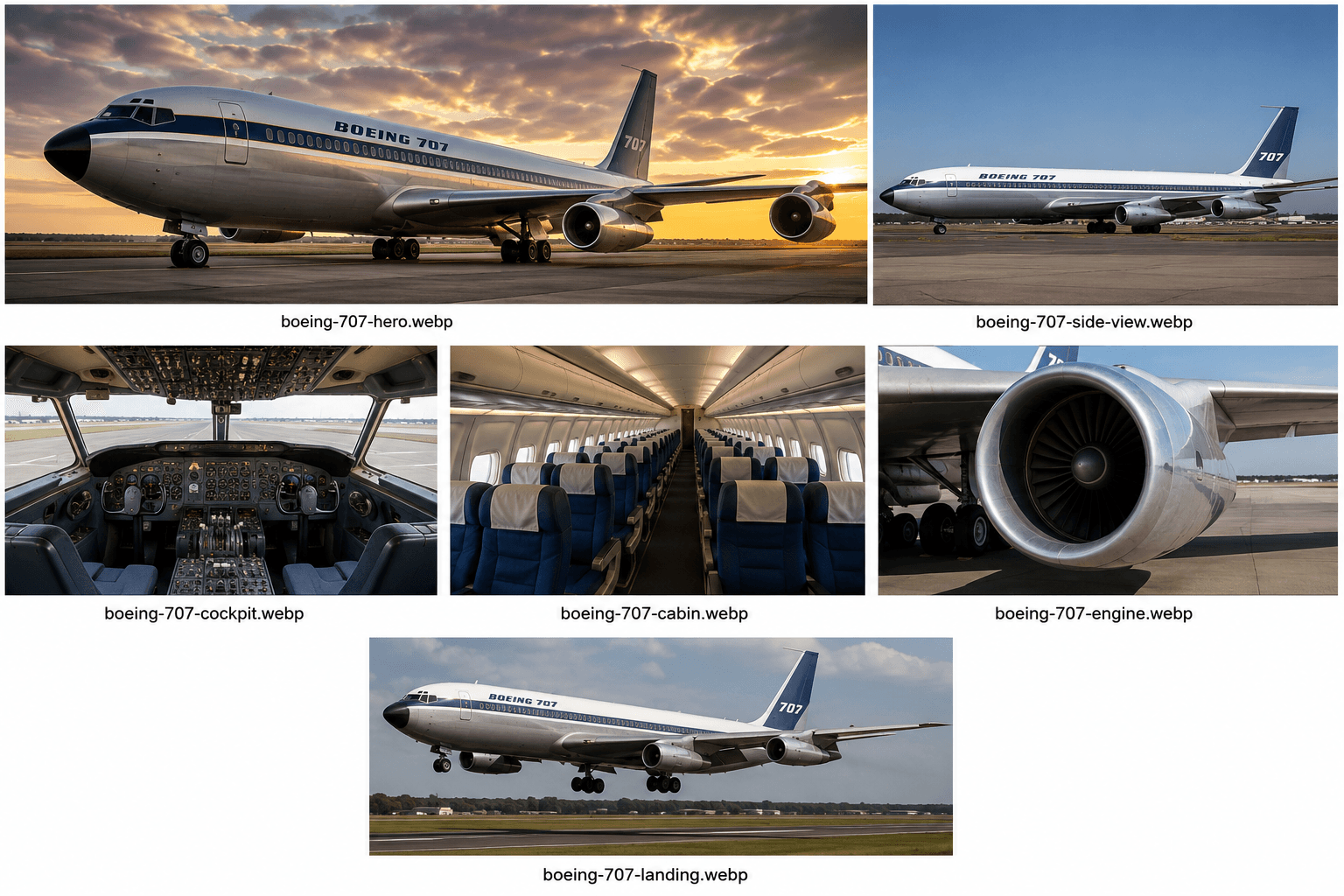
Side profile of the Boeing 777 showcasing its wide-body fuselage, long-span wing and twin-engine configuration. 
Modern Boeing 777 flight deck featuring a fully digital fly-by-wire glass cockpit. 
Spacious Boeing 777 passenger cabin configured for long-haul international operations. 
General Electric GE90 turbofan engine powering the Boeing 777-300ER, the world's most powerful commercial aircraft engine. 
Boeing 777 on final approach with its six-wheel main landing gear fully deployed.
Frequently Asked Questions
Recommended Products
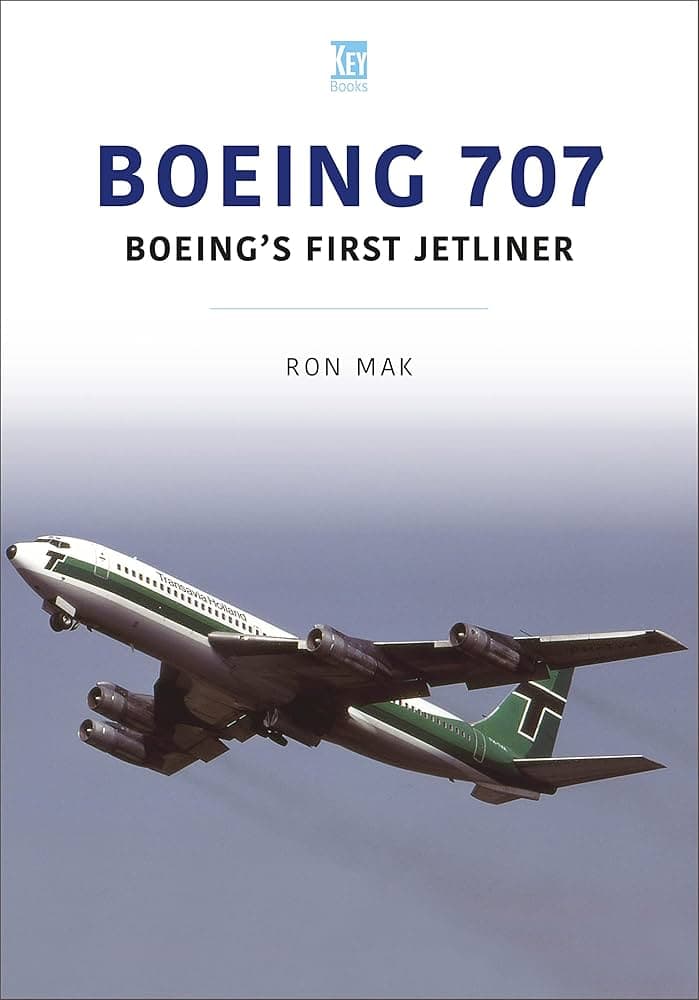
Boeing 707 History Book
Comprehensive reference covering the design, development and operational history of the Boeing 707.
Buy now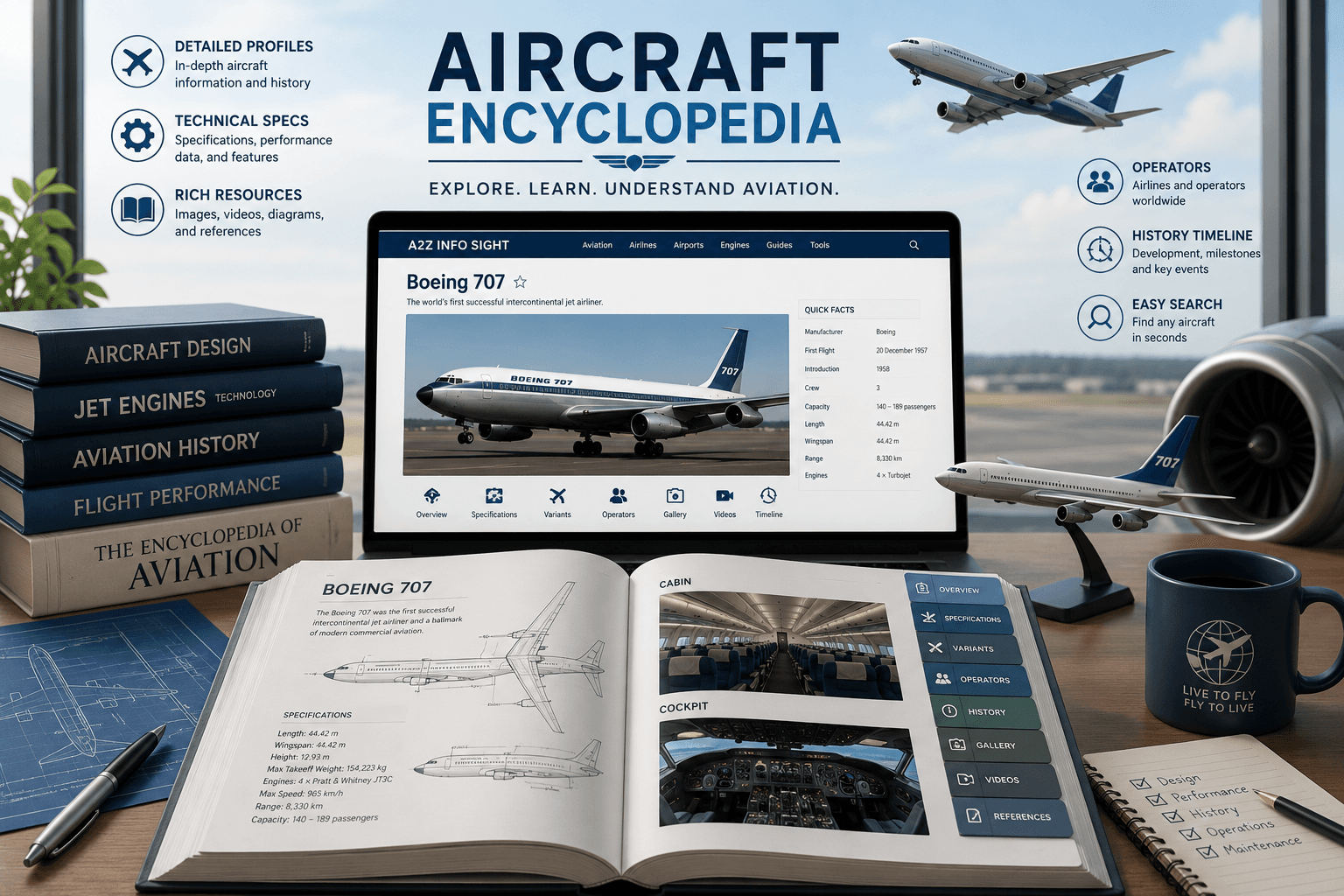
Commercial Aircraft Encyclopedia
A detailed guide covering classic and modern commercial aircraft.
Buy now


As an affiliate, A2Z InfoSight may earn from qualifying purchases.
References
Keep exploring


