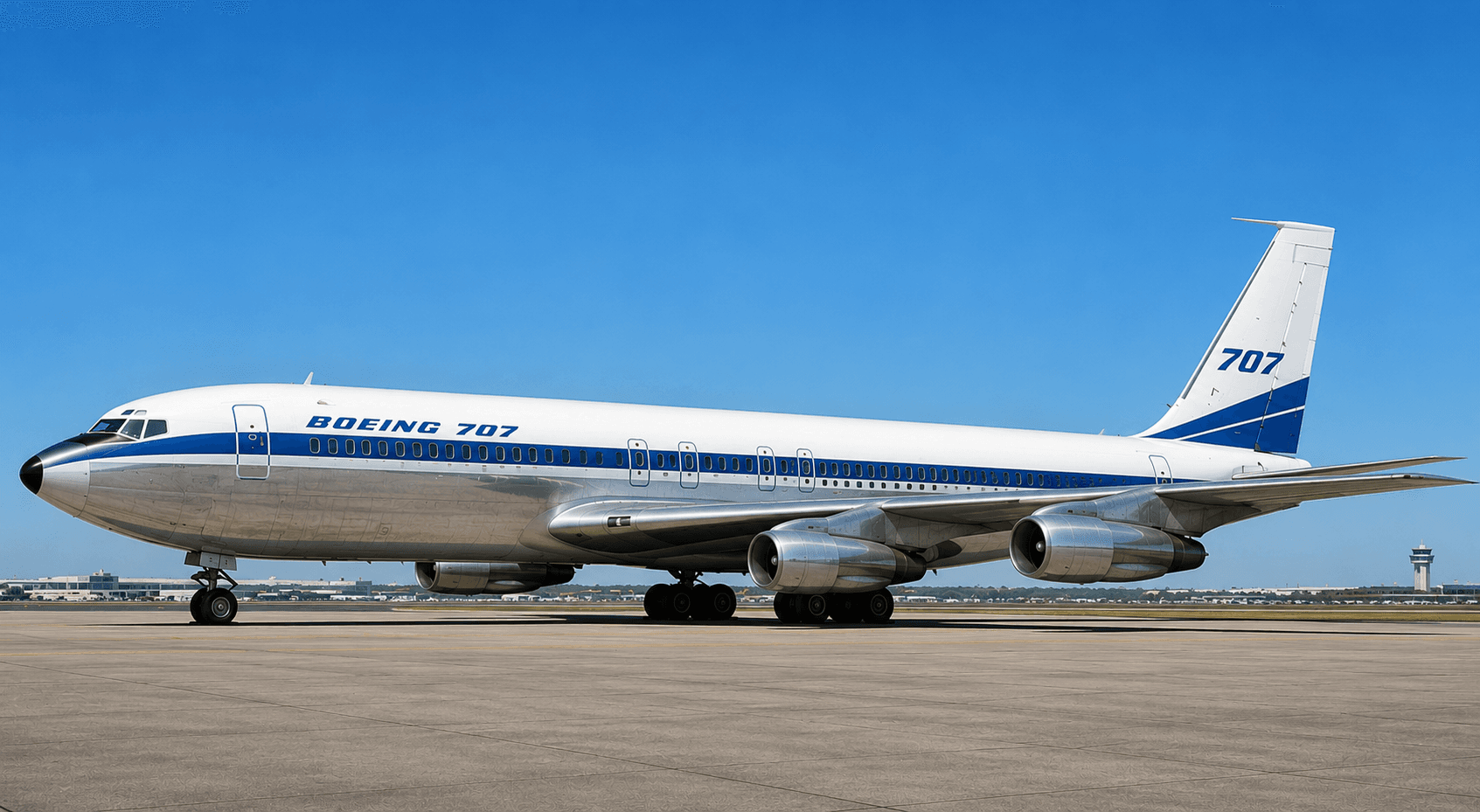
Boeing 737 MAX – Boeing's Most Advanced Single-Aisle Aircraft
Discover the Boeing 737 MAX family featuring the MAX 7, MAX 8, MAX 9 and MAX 10, offering advanced aerodynamics, LEAP-1B engines, lower fuel consumption and enhanced flight deck technology.
- First flight
- 29 January 2016 (737 MAX 8)
- Introduced
- 22 May 2017 (Malindo Air)
- Number built
- 5,000+ delivered (continuing production)
- Range
- 6,570 km (3,550 nautical miles)

Introduction
Overview
The Boeing 737 MAX is the fourth generation of the Boeing 737 family and represents Boeing's most advanced narrow-body commercial aircraft. Developed as the successor to the Boeing 737 Next Generation (NG), the MAX family incorporates CFM International LEAP-1B engines, advanced winglets, updated flight deck technology and significant aerodynamic improvements to reduce fuel consumption and operating costs.
The family consists of the Boeing 737 MAX 7, MAX 8, MAX 9 and MAX 10, providing airlines with a wide range of seating capacities and mission capabilities. Compared with the Boeing 737 NG, the MAX offers approximately 14 percent better fuel efficiency, reduced carbon emissions, lower external noise and increased operating range.
Following worldwide certification updates and extensive design improvements, the Boeing 737 MAX returned to commercial service with enhanced safety systems, revised flight control software and updated pilot training requirements. Today the aircraft operates with airlines across the globe and continues to be one of Boeing's most important commercial aircraft programmes.
At a glance
- Type
- Narrow-body Twin-Engine Jet Airliner
- Role
- Short-to-Medium Range Passenger Airliner
- Programme status
- In Production
- Production
- 2015–Present
Primary operators
History
The Boeing 737 MAX programme was officially launched in 2011 following increasing competition from the Airbus A320neo family. Boeing chose to further evolve the successful Boeing 737 platform rather than develop an entirely new narrow-body aircraft.
The largest technological advancement was the introduction of the CFM International LEAP-1B high-bypass turbofan engines, providing substantial improvements in fuel efficiency and environmental performance. Because these engines are significantly larger than those on the Boeing 737 NG, Boeing redesigned the engine installation, updated the landing gear and introduced the Advanced Technology Split Scimitar Winglets.
The Boeing 737 MAX 8 completed its maiden flight on 29 January 2016 and entered commercial service with Malindo Air in May 2017.
Following two tragic accidents involving the Boeing 737 MAX 8, the worldwide fleet was grounded while Boeing, regulators and airline operators implemented extensive software updates, enhanced pilot training programmes and revised certification requirements. After comprehensive testing and regulatory approval, the aircraft returned to commercial service with strengthened safety measures.
Development
The Boeing 737 MAX programme focused on delivering improved efficiency while maintaining commonality with previous Boeing 737 generations. Engineers introduced new LEAP-1B engines, redesigned winglets, enhanced digital flight deck systems and upgraded environmental control systems.
The aircraft maintains a high level of cockpit commonality with the Boeing 737 NG, allowing airlines to minimize pilot transition training while benefiting from improved automation and aircraft performance.
The programme also incorporated significant flight control software updates, revised certification standards and enhanced pilot training following the aircraft's return to service. These improvements have established the Boeing 737 MAX as one of the most extensively reviewed and certified commercial aircraft programmes in aviation history.
Milestones
Programme Timeline
First flight
29 January 2016 (737 MAX 8)
Entered service
22 May 2017 (Malindo Air)
Production
2015–Present
Retirement
Active Worldwide
Current status
Active passenger, cargo, government and military operations worldwide
Aircraft Design
The Boeing 737 MAX retains the proven Boeing 737 fuselage while incorporating numerous aerodynamic and structural improvements. The aircraft features Advanced Technology Winglets with split scimitar design, optimized engine nacelles and strengthened landing gear to accommodate the larger LEAP-1B engines.
These enhancements reduce drag, improve lift-to-drag ratio and contribute to lower fuel burn and increased range compared with the Boeing 737 NG.
Cockpit
The Boeing 737 MAX flight deck builds upon the successful Boeing 737 NG glass cockpit while incorporating larger displays, updated flight management software and improved aircraft systems integration.
Typical cockpit equipment includes:
- Large LCD Flight Displays
- Dual Flight Management Computers
- Digital Autopilot
- Weather Radar
- Electronic Checklists
- TCAS II
- Enhanced GPWS
- ADS-B capability
- Required Navigation Performance (RNP)
- Satellite Communications (operator dependent)
The cockpit retains strong commonality with earlier Boeing 737 generations while supporting modern airline operational requirements.
Cabin
The Boeing 737 MAX introduces the Boeing Sky Interior as standard, featuring sculpted sidewalls, LED mood lighting, larger pivoting overhead bins and quieter cabin systems.
Depending on the variant, passenger capacity ranges from approximately 138 to 230 passengers.
Cabin improvements include:
- Boeing Sky Interior
- LED mood lighting
- Larger overhead bins
- Improved cabin pressurization
- Reduced cabin noise
- Modern passenger service units
- Flexible seating layouts
Engines
The Boeing 737 MAX is powered by two CFM International LEAP-1B high-bypass turbofan engines incorporating advanced composite fan blades, ceramic matrix composites and modern FADEC engine control.
Major advantages include:
- Approximately 14% lower fuel consumption
- Reduced emissions
- Lower external noise
- Improved reliability
- Lower maintenance costs
- Advanced digital engine monitoring
Flight Controls
The Boeing 737 MAX retains conventional mechanically actuated primary flight controls with hydraulic assistance while incorporating updated flight control computers and enhanced flight envelope protection. The aircraft also includes revised MCAS software certified under enhanced regulatory standards.
Avionics
The Boeing 737 MAX features Honeywell integrated avionics with upgraded flight management systems, enhanced navigation capabilities, ADS-B compliance and modern communication systems supporting global airline operations.
Landing Gear
The landing gear incorporates structural refinements and a taller nose landing gear to provide additional clearance for the larger LEAP-1B engines while maintaining compatibility with existing airport infrastructure.
Performance
The Boeing 737 MAX provides improved fuel efficiency, longer range and lower operating costs than the Boeing 737 NG.
Typical performance includes:
- Cruise Speed: Mach 0.79
- Maximum Speed: Mach 0.82
- Service Ceiling: 41,000 ft
- Range: Up to approximately 6,570 km depending on variant
These improvements enable airlines to operate longer routes while reducing fuel consumption and carbon emissions.
Maintenance
The Boeing 737 MAX incorporates advanced onboard diagnostics, health monitoring systems and modular components that simplify scheduled maintenance. Improved reliability and predictive maintenance capabilities reduce aircraft downtime and support high dispatch reliability.
Safety
The Boeing 737 MAX incorporates comprehensive safety enhancements including revised MCAS software, multiple sensor validation, updated flight control computers, enhanced pilot training requirements, TCAS II, Enhanced GPWS, dual hydraulic systems, engine fire protection, advanced avionics and redundant flight-critical systems. Following extensive recertification by global aviation authorities, the Boeing 737 MAX returned to service with strengthened operational and certification standards.
Reference
Technical Specifications
Full dimensional, weight, powerplant and performance data.
Crew & capacity
- Crew
- 2 (Captain and First Officer) + Cabin Crew
- Passengers
- 162–210 passengers depending on airline configuration
Dimensions
- Length
- 39.52 m (129 ft 8 in)
- Wingspan
- 35.92 m (117 ft 10 in) with Advanced Technology Winglets
- Height
- 12.30 m (40 ft 4 in)
- Fuselage width
- 3.76 m (12 ft 4 in)
- Cabin width
- 3.54 m (11 ft 7 in)
- Wheelbase
- 17.17 m (56 ft 4 in)
Weights
- Empty weight
- Approximately 45,070 kg (99,360 lb)
- Operating weight
- Approximately 46,900 kg (103,400 lb)
- Max takeoff weight
- 82,191 kg (181,200 lb)
- Max landing weight
- 69,309 kg (152,800 lb)
- Max payload
- 23,000 kg (50,700 lb)
- Fuel capacity
- 26,035 L (6,878 US gal)
Powerplant
- Engines
- 2 × CFM International LEAP-1B High-Bypass Turbofan
- Engine manufacturer
- CFM International
- Engine model
- LEAP-1B27
- Thrust
- 28,000 lbf (124.5 kN) each
Performance
- Maximum speed
- 876 km/h (Mach 0.82)
- Cruise speed
- 839 km/h (Mach 0.79)
- Stall speed
- Approximately 205 km/h (111 knots)
- Range
- 6,570 km (3,550 nautical miles)
- Service ceiling
- 41,000 ft (12,500 m)
- Rate of climb
- Approximately 3,000 ft/min (914 m/min)
- Takeoff distance
- Approximately 2,600 m (8,530 ft)
- Landing distance
- Approximately 1,600 m (5,250 ft)
Fuel & operating limits
- Fuel consumption
- Approximately 2,200–2,500 L/hour depending on payload and flight profile
- Endurance
- Up to 8 hours
- Maximum altitude
- 41,000 ft
- Max operating Mach
- Mach 0.82
- Runway requirement
- Typically 2,100–2,700 m depending on aircraft weight and environmental conditions
Programme
- First flight
- 29 January 2016
- Introduction
- 22 May 2017 (Malindo Air)
- Production years
- 2015–Present
- Number built
- 5,000+ delivered (continuing production)
- Unit cost
- Approximately US$121.6 million (MAX 8 list price)
Variants
Boeing 737 MAX 7
The smallest member of the Boeing 737 MAX family, designed as the replacement for the Boeing 737-700. It offers the longest range within the MAX family and is optimized for lower-capacity markets.
Boeing 737 MAX 8
The baseline and most successful Boeing 737 MAX variant. It replaces the Boeing 737-800 and provides an excellent balance of passenger capacity, operating economics and range.
Boeing 737 MAX 8-200
A high-density version of the MAX 8 developed primarily for low-cost carriers. It accommodates up to 210 passengers through an additional emergency exit configuration.
Boeing 737 MAX 9
A stretched version of the MAX 8 offering increased passenger capacity while maintaining commonality across the Boeing 737 MAX family.
Boeing 737 MAX 10
The largest member of the Boeing 737 MAX family. Designed to compete directly with the Airbus A321neo, it offers the highest seating capacity among all Boeing 737 variants.
Boeing Business Jet MAX (BBJ MAX)
Corporate and government VIP aircraft based on the Boeing 737 MAX platform featuring extended range and luxury interior configurations.
Major Operators
- Southwest Airlines
- United Airlines
- American Airlines
- Alaska Airlines
- Ryanair
- FlyDubai
- GOL Linhas Aéreas
- WestJet
- Copa Airlines
- Turkish Airlines
- Air Canada
- Singapore Airlines
- Aeroméxico
- LOT Polish Airlines
- Icelandair
Advantages & Limitations
Advantages
- Approximately 14% better fuel efficiency than the Boeing 737 Next Generation.
- Advanced LEAP-1B engines significantly reduce fuel burn and emissions.
- Improved aerodynamic performance through Advanced Technology Winglets.
- Modern Boeing Sky Interior enhances passenger comfort.
- Excellent commonality with Boeing 737 NG fleets reduces training costs.
- Lower operating costs for airlines on short- and medium-haul routes.
- Longer range enables new point-to-point city pairs.
- Advanced digital avionics improve pilot situational awareness.
- Outstanding dispatch reliability.
- Large worldwide support network and spare parts availability.
Limitations
- Cabin width remains narrower than the Airbus A320neo family.
- The aircraft architecture is constrained by the original Boeing 737 design.
- Low ground clearance limits future engine size increases.
- The programme experienced a prolonged worldwide grounding following two accidents.
- Pilot training requirements increased after recertification.
- Some airlines delayed deliveries because of certification timelines.
- Higher acquisition cost than earlier Boeing 737 generations.
- The MAX 10 certification programme remains ongoing.
- Cargo volume is lower than some competing aircraft.
- Airport compatibility may be limited at certain gates because of variant length.
Interesting Facts
- The Boeing 737 MAX uses CFM International LEAP-1B engines with advanced composite fan blades.
- Advanced Technology Winglets improve fuel efficiency by reducing induced drag.
- The MAX 8 became Boeing's fastest-selling commercial aircraft at launch.
- The Boeing Sky Interior comes as standard on every Boeing 737 MAX.
- The MAX family offers approximately 50% lower noise footprint than earlier Boeing 737 generations.
- The Boeing 737 MAX shares a high degree of cockpit commonality with the Boeing 737 NG.
- Thousands of Boeing 737 MAX aircraft are currently in airline service worldwide.
- The MAX 8-200 was developed specifically for high-density low-cost airline operations.
- The programme underwent one of the most comprehensive certification reviews in aviation history.
- The Boeing 737 MAX incorporates updated flight control software with multiple layers of redundancy.
- The LEAP-1B engine uses ceramic matrix composite materials for improved efficiency.
- The aircraft supports modern Required Navigation Performance (RNP) procedures.
- The Boeing 737 MAX family continues to receive performance improvements through software updates.
- The aircraft competes directly with the Airbus A320neo family.
- The Boeing 737 MAX remains one of Boeing's highest-production commercial aircraft programmes.
Comparison
Versus the Airbus A320neo Family
- The Boeing 737 MAX uses conventional control columns while the Airbus A320neo uses side-stick controllers.
- The Airbus A320neo incorporates full fly-by-wire flight controls, whereas the Boeing 737 MAX retains mechanically actuated primary controls with hydraulic assistance.
- The Boeing 737 MAX offers strong fleet commonality with previous Boeing 737 generations.
- The Airbus A320neo provides a slightly wider passenger cabin.
- Both aircraft families use advanced high-bypass turbofan engines to improve fuel efficiency.
- The Boeing 737 MAX employs Advanced Technology Winglets, while the Airbus A320neo uses Sharklets.
- The Boeing 737 MAX 10 competes directly with the Airbus A321neo.
- Both aircraft families dominate today's global narrow-body commercial aircraft market.
Interactive
Explore the Aircraft
Hover or tap a marker to identify each major part of the aircraft.
Select a marker to learn about each part of the aircraft.
Gallery

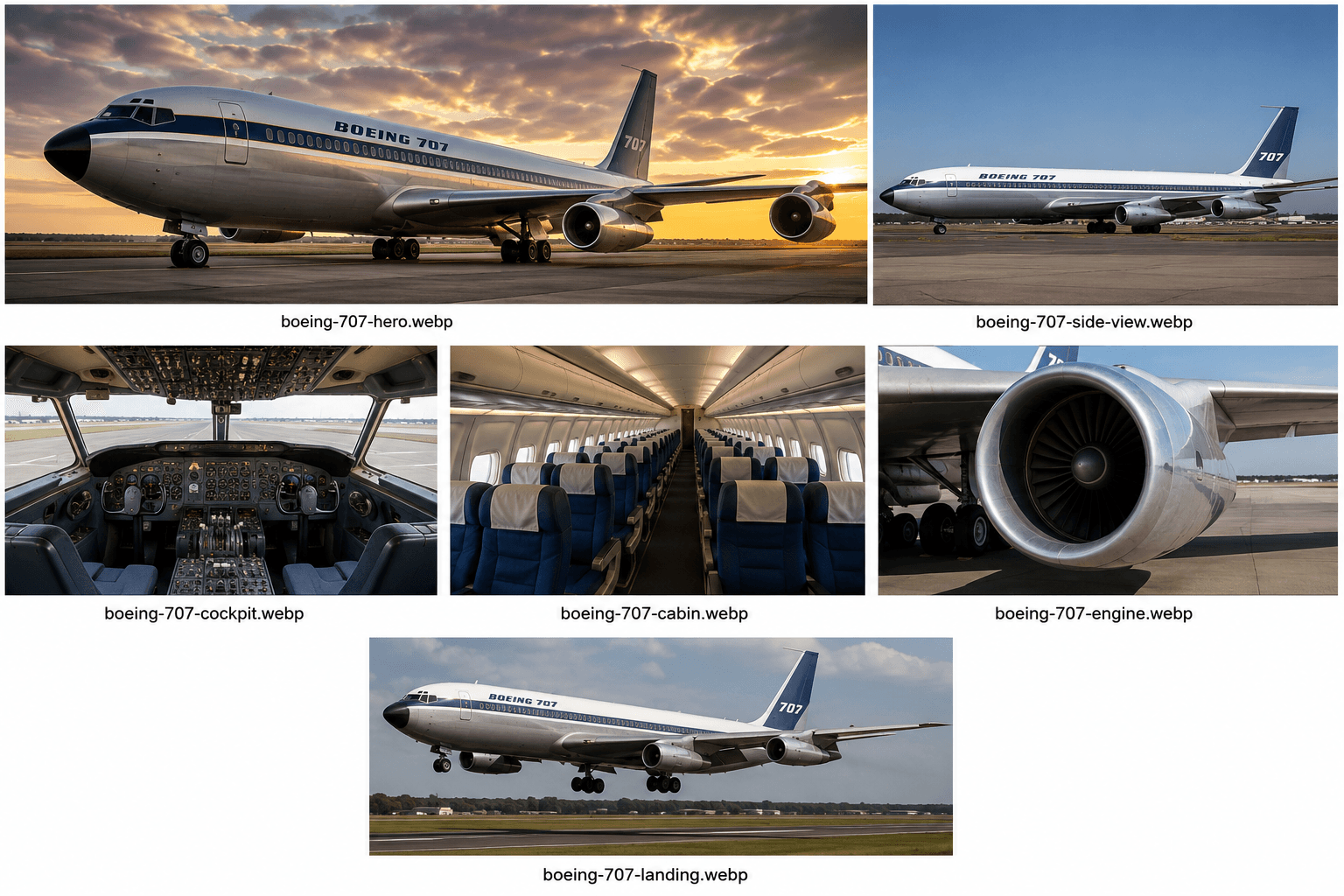
Boeing 737 MAX side profile showcasing the Advanced Technology Winglets and LEAP-1B engines. 
Modern Boeing 737 MAX flight deck featuring large LCD displays and advanced avionics. 
Boeing Sky Interior with sculpted sidewalls, LED mood lighting and larger overhead bins. 
CFM International LEAP-1B engine featuring composite fan blades and advanced fuel-efficient technology. 
Boeing 737 MAX on final approach with landing gear deployed.
Frequently Asked Questions
Recommended Products
Boeing 707 History Book
Comprehensive reference covering the design, development and operational history of the Boeing 707.
Buy now
Commercial Aircraft Encyclopedia
A detailed guide covering classic and modern commercial aircraft.
Buy now


As an affiliate, A2Z InfoSight may earn from qualifying purchases.
References
Keep exploring