Boeing 707 - The Aircraft That Ushered in the Jet Age
Discover how the Boeing 707 transformed commercial aviation, connected continents faster than ever before, and became one of the most influential passenger aircraft in aviation history. Specifications shown are representative of the Boeing 707-320B/320C, the most widely operated long-range production variant. Earlier 707 variants differed in dimensions, weights, engines, and performance.
- First flight
- 20 December 1957
- Introduced
- 26 October 1958 (Pan American World Airways)
- Number built
- 865
- Range
- 10,650 km (5,750 nautical miles)
Introduction
Overview
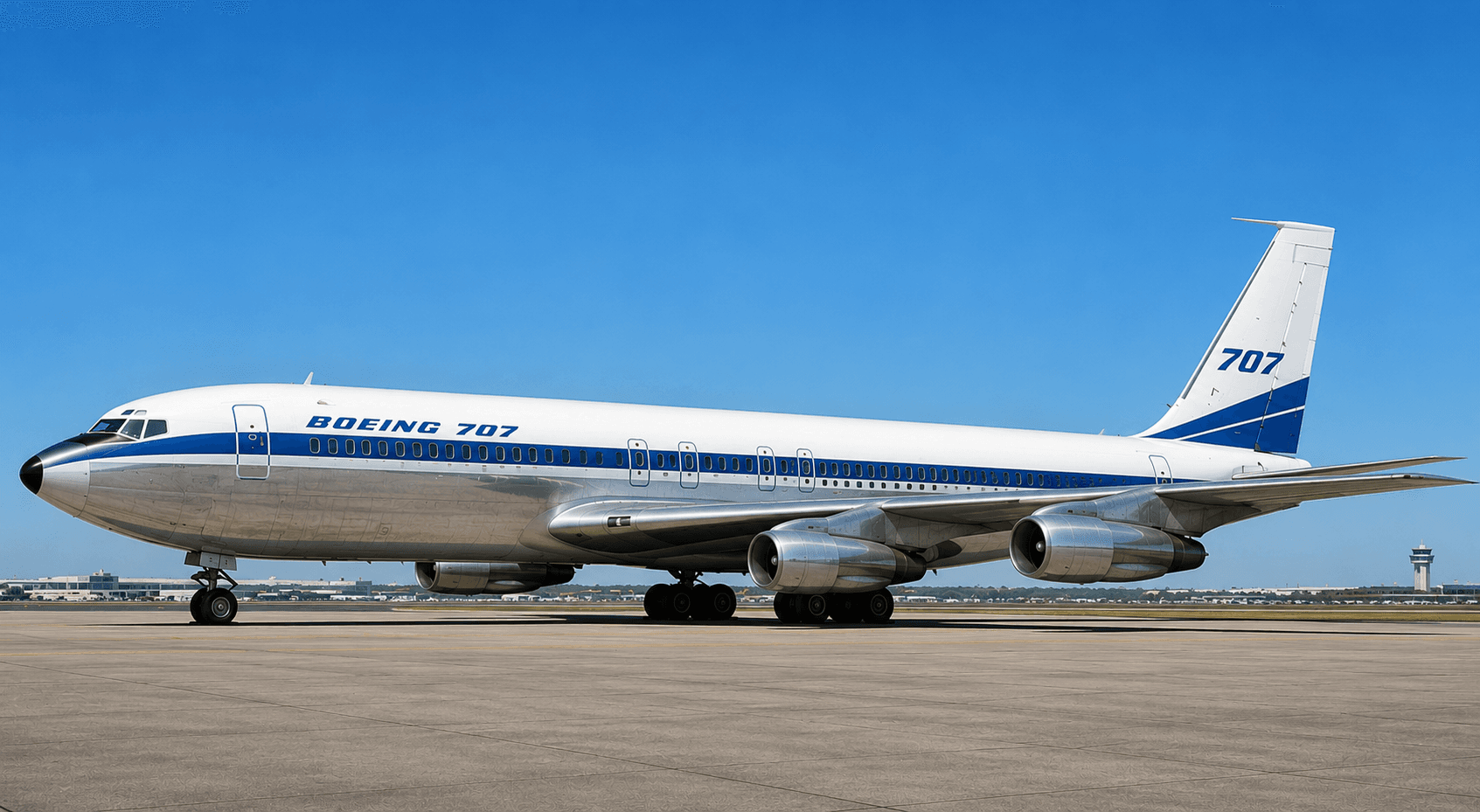
The Boeing 707 is widely regarded as the aircraft that revolutionized commercial air travel and ushered in the modern Jet Age. Developed by Boeing during the 1950s, it became the company's first successful commercial jetliner and established Boeing as a dominant force in the global aerospace industry.
Designed as a long-range, narrow-body jet airliner, the Boeing 707 dramatically reduced travel times compared with piston-engine aircraft such as the Douglas DC-7 and Lockheed Super Constellation. For passengers, it introduced faster, smoother and more comfortable international travel, while airlines benefited from improved efficiency and the ability to operate profitable long-distance routes.
The aircraft featured four turbojet engines mounted beneath swept wings, a pressurized fuselage, advanced flight controls for its era and improved passenger comfort. Over time, newer turbofan-powered variants increased fuel efficiency, reduced noise and extended operational range.
Both the Boeing 707 and the KC-135 Stratotanker were developed from Boeing's Model 367-80 prototype. The commercial 707 also provided the basis for later military aircraft such as the E-3 Sentry AWACS and E-8 Joint STARS.. Its design philosophy also influenced later Boeing aircraft such as the 727, 737 and 757.
Although most passenger airlines retired the Boeing 707 decades ago, many aircraft continue to operate in military, cargo, research and government roles, highlighting the exceptional durability and versatility of its design.
At a glance
- Type
- Narrow-body, Long-range Jet Airliner
- Role
- Commercial Passenger Airliner
- Programme status
- Retired from most passenger service
- Production
- 1957–1979
Primary operators
History
During the early 1950s, commercial aviation was dominated by piston-powered aircraft capable of carrying passengers across continents, but with relatively slow cruise speeds and high operating costs. Meanwhile, British manufacturers introduced the de Havilland Comet, demonstrating the enormous potential of jet-powered passenger transport despite its early structural challenges.
Recognizing that jet propulsion represented the future of commercial aviation, Boeing invested approximately $16 million of its own funds to develop the Model 367-80, commonly known as the "Dash 80." The prototype first flew in 1954 and successfully demonstrated the performance, reliability and passenger appeal of a large jet-powered transport aircraft.
Lessons learned from the Dash 80 directly led to the development of the Boeing 707. Airlines around the world quickly recognized its commercial potential, and Pan American World Airways became the launch customer. On 26 October 1958, Pan Am inaugurated scheduled Boeing 707 service between New York and Paris, marking a historic milestone in commercial aviation.
The Boeing 707 rapidly gained worldwide acceptance. Airlines valued its speed, reliability and ability to fly longer routes with fewer stops, while passengers appreciated significantly shorter travel times and improved onboard comfort.
Throughout the 1960s, the Boeing 707 became synonymous with international air travel. It connected continents, expanded tourism, accelerated global business and played a pivotal role in making air travel accessible to millions of people.
Production continued until 1979, with over one thousand aircraft manufactured across numerous passenger, cargo and military variants. Although eventually replaced by more fuel-efficient aircraft such as the Boeing 767 and Boeing 757, the Boeing 707 remains one of the most historically significant aircraft ever produced.
Development
The Boeing 707 evolved from Boeing's experimental Dash 80 demonstrator, which was originally designed to evaluate the feasibility of large swept-wing jet transports. Engineers incorporated advanced aerodynamic concepts, including a 35-degree swept wing, pod-mounted engines and a highly efficient low-drag fuselage.
Initial production aircraft were powered by Pratt & Whitney JT3C turbojet engines. While these engines provided impressive performance, they consumed significant amounts of fuel and generated considerable noise. Boeing subsequently introduced JT3D turbofan-powered variants, offering better fuel economy, increased range and quieter operation.
As airline requirements evolved, Boeing introduced multiple fuselage lengths, increased maximum takeoff weights, strengthened wing structures and improved systems to support longer international routes and higher passenger capacities.
Several important variants emerged during the aircraft's production life, including the 707-120, 707-220, 707-320 Intercontinental and the stretched 707-320B/C series. These models offered airlines greater flexibility for domestic, transcontinental and intercontinental operations.
Beyond commercial aviation, the Boeing 707 platform proved exceptionally adaptable. Its airframe became the basis for aerial refueling tankers, airborne early warning aircraft, electronic intelligence platforms, research aircraft and VIP government transports. Many of these specialized derivatives remain operational today, demonstrating the engineering excellence and longevity of the original design.
The success of the Boeing 707 also established Boeing's reputation in commercial aviation and laid the technological foundation for future aircraft families that continue to serve airlines around the world.
Milestones
Programme Timeline
First flight
20 December 1957
Entered service
26 October 1958 (Pan American World Airways)
Production
1957–1979
Retirement
Largely retired from passenger service
Current status
Passenger service largely retired; continues in military, cargo and special mission roles.
Aircraft Design
The Boeing 707 introduced numerous engineering innovations that established the foundation for modern commercial jetliners. Its sleek fuselage, swept wings and pod-mounted engines represented a major technological leap over piston-engine aircraft of the previous decade.
The aircraft features a low-wing monoplane configuration with a 35-degree swept wing designed to delay the onset of shock waves as the aircraft approaches transonic speeds. This aerodynamic design allows efficient cruising at approximately Mach 0.82 to Mach 0.84 while providing excellent high-altitude performance.
Four engines are mounted beneath the wings using individual pylons. This configuration simplified maintenance, reduced cabin vibration, improved engine accessibility and minimized the impact of engine failures on aircraft controllability.
The circular pressurized fuselage was designed for passenger comfort during long-haul flights and later became the basis for Boeing's narrow-body aircraft philosophy. Relatively large passenger windows and open overhead luggage racks typical for the era and multiple cabin layouts made the aircraft attractive to airlines operating both domestic and international services.
The empennage consists of a conventional vertical stabilizer and swept horizontal stabilizers mounted low on the tail. Hydraulically powered flight controls improved handling while maintaining stability throughout the aircraft's flight envelope.
Structurally, the Boeing 707 employed lightweight aluminum alloys combined with fail-safe design principles that significantly increased fatigue resistance compared to earlier transport aircraft. Continuous improvements throughout production enhanced structural strength, increased maximum takeoff weight and extended service life.
Many aerodynamic concepts introduced on the Boeing 707 directly influenced later Boeing aircraft including the 727, 737 and 757, making it one of the most influential commercial aircraft designs in aviation history.
Cockpit
The Boeing 707 cockpit reflected the technology of the late 1950s and early 1960s while incorporating many advanced features for its time. It was designed for a three-person flight crew consisting of the Captain, First Officer and Flight Engineer.
The Captain occupied the left seat while the First Officer sat on the right. Between them was a central pedestal housing throttle levers, flap controls, speed brake controls and engine management systems. The Flight Engineer was positioned behind and slightly to the right, facing a dedicated systems panel containing electrical, hydraulic, pneumatic, fuel and environmental controls.
Primary flight instruments included:
- Attitude Indicator
- Airspeed Indicator
- Altimeter
- Vertical Speed Indicator
- Heading Indicator
- Turn and Slip Indicator
- Magnetic Compass
Engine instruments monitored:
- Engine Pressure Ratio (EPR)
- N1/N2 RPM
- Exhaust Gas Temperature
- Fuel Flow
- Oil Pressure
- Oil Temperature
- Hydraulic Pressure
The cockpit also featured early weather radar, radio navigation equipment, autopilot systems and communication radios that enabled long-distance international operations.
Unlike today's glass cockpits, the Boeing 707 relied almost entirely on analog gauges and electromechanical instruments. Although this required greater pilot workload, the layout was logical and became the standard for several generations of Boeing aircraft.
The cockpit philosophy introduced by the Boeing 707 strongly influenced later Boeing aircraft families and laid the groundwork for the company's consistent flight deck design philosophy.
Cabin
The Boeing 707 represented a significant advancement in passenger comfort compared with earlier piston-powered airliners. Airlines could configure the aircraft for first-class, mixed-class or high-density economy operations depending on route requirements.
Typical seating capacity ranged between approximately 140–219 passengers depending on configuration and cabin layout. Wider fuselage dimensions allowed more comfortable seating arrangements than many competing aircraft of the era.
Cabin features included:
- Pressurized cabin for improved passenger comfort
- Large panoramic windows
- Overhead lighting
- Adjustable air vents
- Coat storage
- Spacious galleys
- Lavatories
- Dedicated first-class seating areas
- Improved cabin insulation
The quieter turbofan-powered variants significantly reduced cabin noise compared with earlier turbojet models, enhancing the passenger experience during long-haul flights.
Many airlines introduced premium services aboard the Boeing 707, including gourmet meals, cocktail lounges and luxurious first-class seating, helping establish modern international airline travel standards.
Although today's wide-body aircraft offer greater passenger space, the Boeing 707 was considered exceptionally comfortable during its operational peak and helped redefine expectations for commercial air travel.
Engines
Throughout its production life, the Boeing 707 was powered by several engine variants, reflecting the rapid evolution of jet propulsion technology during the 1950s and 1960s.
Early production aircraft utilized Pratt & Whitney JT3C turbojet engines. These engines delivered impressive thrust but consumed large amounts of fuel and produced significant noise.
Later variants adopted Pratt & Whitney JT3D turbofan engines, providing several important advantages:
- Improved fuel efficiency
- Increased range
- Lower operating costs
- Reduced cabin noise
- Higher takeoff performance
- Better climb capability
- Lower maintenance requirements
Each engine was mounted beneath the wing on an individual pylon, allowing rapid replacement during maintenance while reducing structural loads transmitted into the wing.
The four-engine configuration also offered excellent redundancy for long overwater flights, an important safety consideration before the widespread acceptance of ETOPS regulations.
Depending on the aircraft variant, engine thrust ranged from approximately 13,500 pounds to over 19,000 pounds per engine, enabling the Boeing 707 to operate from a wide variety of international airports while carrying substantial passenger and cargo payloads.
The success of the JT3D-powered Boeing 707 demonstrated the commercial benefits of low-bypass turbofan technology and influenced future jet engine development across the aviation industry.
Flight Controls
The Boeing 707 employed conventional mechanically linked flight controls augmented by hydraulic power assistance. This combination provided pilots with precise handling characteristics while minimizing control forces during all phases of flight.
Primary flight controls include:
- Ailerons
- Elevators
- Rudder
Secondary flight controls include:
- Leading-edge high-lift devices (variant dependent)
- Trailing-edge flaps
- Spoilers
- Speed brakes
- Trim systems
Hydraulic actuators significantly reduced pilot workload by assisting movement of the primary control surfaces, particularly during high-speed operations where aerodynamic loads become substantial.
Large trailing-edge flaps increased lift during takeoff and landing, allowing safer operations from airports with shorter runways. Spoilers assisted roll control after touchdown while simultaneously acting as speed brakes during descent.
Pitch, roll and yaw trim systems enabled pilots to maintain stable flight with minimal control input, improving comfort during long-haul operations.
The Boeing 707 also incorporated one of Boeing's early autopilot systems capable of maintaining heading, altitude and selected navigation paths, reducing crew workload on lengthy international flights.
Despite its age, pilots have long praised the Boeing 707 for its responsive handling qualities, stable cruise characteristics and predictable flight behavior, all of which contributed to its outstanding operational reputation.
Avionics
The Boeing 707 represented one of the most technologically advanced airliners of its era. Although it predates today's digital flight decks, its avionics suite enabled reliable long-range international operations across oceans and remote regions.
The cockpit was equipped with conventional analog flight instruments supported by radio navigation systems, weather radar and an automatic flight control system. Over its service life, many aircraft received avionics upgrades to comply with evolving air traffic management requirements.
Typical avionics equipment included:
- Automatic Flight Control System (AFCS)
- Autopilot
- Flight Director
- Weather Radar
- VHF Communication Radios
- HF Radios for Oceanic Flights
- VOR Navigation
- Distance Measuring Equipment (DME)
- Automatic Direction Finder (ADF)
- Instrument Landing System (ILS)
- Marker Beacon Receiver
- Radio Altimeter
- Transponder
- Ground Proximity Warning System (later upgrades)
- Traffic Collision Avoidance System (modernized aircraft)
Military and government variants often received mission-specific avionics such as airborne surveillance radar, electronic intelligence systems, satellite communications and airborne command-and-control equipment.
Despite relying on analog technology, the Boeing 707 established avionics standards that influenced several generations of Boeing aircraft.
Landing Gear
The Boeing 707 features a conventional retractable tricycle landing gear configuration designed for high reliability and efficient ground handling.
The landing gear consists of:
- One steerable dual-wheel nose landing gear
- Two main landing gear assemblies
- Four wheels on each main landing gear bogie
- Hydraulic retraction and extension system
- Hydraulic braking system
- Anti-skid protection
The landing gear retracts inward into dedicated wheel wells within the fuselage and wing root structure, reducing aerodynamic drag during cruise.
The nose gear provides precise steering while taxiing and supports safe maneuvering in congested airport environments.
Main landing gear assemblies are engineered to absorb significant landing loads through oleo-pneumatic shock absorbers, ensuring passenger comfort and structural protection during landing.
Powerful steel brakes, with some later military operators adopting upgraded brake systems provide effective stopping performance, while thrust reversers on the engines significantly reduce landing distance.
The Boeing 707's landing gear proved exceptionally durable, supporting decades of airline, cargo and military operations in diverse operating environments around the world.
Performance
For its time, the Boeing 707 delivered remarkable performance that fundamentally changed commercial aviation.
Typical performance characteristics include:
- Cruise Speed: Approximately 970 km/h (Mach 0.82–0.84)
- Maximum Speed: 972–990 km/h depending on altitude
- Service Ceiling: up to 42,000 ft depending on variant.
- Maximum Range: Up to 10,650 km (variant dependent)
- Typical Cruise Altitude: 35,000–41,000 ft
The aircraft's swept-wing design, powerful engines and efficient aerodynamics enabled airlines to complete long-haul routes much faster than piston-powered aircraft.
Compared with propeller-driven airliners, the Boeing 707 reduced transatlantic travel times by several hours, making international business travel and tourism significantly more practical.
Its four-engine configuration provided excellent climb performance and operational redundancy, particularly on long overwater routes where engine reliability was a critical consideration.
The Boeing 707's combination of speed, range and payload established new performance benchmarks for commercial aviation and influenced the design objectives of nearly every subsequent jet airliner.
Maintenance
Maintaining the Boeing 707 required comprehensive inspection programs designed to ensure continued airworthiness throughout its operational life.
Routine maintenance included:
- Daily transit inspections
- Pre-flight walk-around inspections
- using maintenance programs equivalent to today's A, C and heavy maintenance checks
- Structural fatigue inspections
- Corrosion prevention and control
- Engine borescope inspections
- Landing gear overhaul
- Hydraulic system inspections
- Flight control rigging checks
- Fuel system leak inspections
- Electrical system testing
- Avionics calibration
As the fleet aged, operators implemented additional structural inspection programs focusing on fuselage skin, wing spars, pressure bulkheads and fatigue-prone areas.
Military operators often incorporated modern avionics, upgraded wiring and structural reinforcement programs to extend aircraft service life well beyond the original commercial design expectations.
The aircraft's relatively simple systems architecture and excellent accessibility made it easier to maintain than many later wide-body aircraft.
Safety
The Boeing 707 was designed during a period when commercial aviation safety standards were rapidly evolving. Throughout its operational life, the aircraft incorporated numerous safety improvements that significantly enhanced reliability.
Key safety features include:
- Multiple independent hydraulic systems
- Four-engine redundancy
- Pressurized fail-safe fuselage structure
- Fire detection systems
- Engine fire suppression
- Ice protection systems
- Weather radar
- Emergency oxygen systems
- Emergency exits
- Redundant electrical generation
- Anti-skid braking system
Operational experience gained from the Boeing 707 contributed directly to improvements in airline training, maintenance procedures and aircraft certification standards.
Many aircraft later received additional safety enhancements, including:
- Ground Proximity Warning System (GPWS)
- Traffic Collision Avoidance System (TCAS)
- Enhanced weather radar
- Modern navigation equipment
- Digital communication systems
Although modern aircraft incorporate far more advanced technology, the Boeing 707 established many of the engineering principles and operational practices that continue to underpin commercial aviation safety today. Its long operational history demonstrates the robustness of its design and the effectiveness of continuous safety improvements throughout its service life.
Reference
Technical Specifications
Full dimensional, weight, powerplant and performance data.
Crew & capacity
- Crew
- 3 (Captain, First Officer, Flight Engineer) + Cabin Crew
- Passengers
- 140–189 passengers depending on aircraft variant and cabin configuration
Dimensions
- Length
- 46.61 m (152 ft 11 in)
- Wingspan
- 44.42 m (145 ft 9 in)
- Height
- 12.93 m (42 ft 5 in)
- Fuselage width
- 3.76 m (12 ft 4 in)
- Cabin width
- 3.53 m (11 ft 7 in)
- Wheelbase
- 17.12 m (56 ft 2 in)
Weights
- Empty weight
- Approximately 65,400 kg (144,200 lb)
- Operating weight
- Approximately 69,400 kg (153,000 lb)
- Max takeoff weight
- 151,315 kg (333,600 lb)
- Max landing weight
- 112,490 kg (248,000 lb)
- Max payload
- Approximately 38,100 kg (84,000 lb)
- Fuel capacity
- Approximately 90,300 L (23,855 US gal)
Powerplant
- Engines
- 4 × Pratt & Whitney JT3D-3B Turbofan
- Engine manufacturer
- Pratt & Whitney
- Engine model
- JT3D-3B Turbofan
- Thrust
- 18,000 lbf (80 kN) each
Performance
- Maximum speed
- 1,009 km/h (545 knots, Mach 0.86)
- Cruise speed
- 972 km/h (525 knots, Mach 0.82)
- Stall speed
- Approximately 204 km/h (110 knots) depending on weight
- Range
- 10,650 km (5,750 nautical miles)
- Service ceiling
- 42,000 ft (12,800 m)
- Rate of climb
- Approximately 2,000 ft/min (610 m/min)
- Takeoff distance
- Approximately 3,100 m (10,170 ft) at MTOW
- Landing distance
- Approximately 1,900 m (6,230 ft)
Fuel & operating limits
- Fuel consumption
- Approximately 10,000–11,500 L/hour depending on flight phase and payload
- Endurance
- Up to 11 hours
- Maximum altitude
- 42,000 ft
- Max operating Mach
- Mach 0.88
- Runway requirement
- Typically 3,000 m (9,840 ft) or longer at maximum takeoff weight
Programme
- First flight
- 20 December 1957
- Introduction
- 26 October 1958 (Pan American World Airways)
- Production years
- 1957–1979
- Number built
- 1,010
- Unit cost
- Approximately US$5.5–6 million (1960s, depending on variant)
Variants
Boeing 707-120
The original production version designed primarily for domestic routes. Powered by Pratt & Whitney JT3C turbojet engines and introduced into service with Pan American World Airways in 1958.
Boeing 707-138
A shorter, lighter version developed specifically for Qantas to improve range on long overwater routes between Australia and North America.
Boeing 707-220
Powered by Pratt & Whitney JT4A turbojet engines offering greater thrust for hot-and-high airport operations. Only a few aircraft were produced.
Boeing 707-320 Intercontinental
Introduced a longer fuselage, increased wingspan and greater fuel capacity to support long-haul intercontinental operations.
Boeing 707-320B
Equipped with Pratt & Whitney JT3D turbofan engines providing improved fuel efficiency, lower noise levels and increased operational range. This became the most successful passenger variant.
Boeing 707-320C
Convertible passenger and cargo variant featuring a strengthened floor and large cargo door, allowing operators to switch between passenger and freight configurations.
Boeing 707-420
Powered by Rolls-Royce Conway turbofan engines. Operated primarily by British and European airlines and recognized as the first turbofan-powered Boeing 707 variant.
Military & Special Mission Variants
The Boeing 707 airframe formed the basis for several military aircraft including the E-3 Sentry AWACS, E-8 Joint STARS, VC-137 presidential transport, E-6 Mercury and various airborne surveillance, reconnaissance and command aircraft.
Major Operators
- Pan American World Airways (Pan Am)
- American Airlines
- Trans World Airlines (TWA)
- United Airlines
- Braniff International Airways
- Continental Airlines
- British Overseas Airways Corporation (BOAC) (later inherited by British Airways in 1974)
- Lufthansa
- Air France
- KLM Royal Dutch Airlines
- Sabena
- Alitalia
- Olympic Airways
- Swissair
- Scandinavian Airlines (SAS)
- Iberia
- Qantas
- Japan Air Lines (JAL)
- Air India
- Pakistan International Airlines (PIA)
- Middle East Airlines
- Saudi Arabian Airlines
- Iran Air
- Varig
- Aerolíneas Argentinas
- El Al
- South African Airways
- Israel Air Force
- United States Air Force
- NATO
- Chilean Air Force
- Royal Saudi Air Force
Advantages & Limitations
Advantages
- One of the world's first successful commercial jet airliners.
- Revolutionized international air travel by significantly reducing flight times.
- Excellent long-range capability for transcontinental and transoceanic routes.
- Four-engine configuration provided high redundancy and reliability.
- Comfortable and pressurized cabin compared to piston-powered aircraft of its era.
- Established Boeing as a leading commercial aircraft manufacturer.
- Its design lineage led to numerous military and special mission aircraft, including the E-3 Sentry AWACS, E-8 Joint STARS, VC-137, and the related KC-135 Stratotanker.
- Simple and robust airframe with an exceptionally long service life.
- Convertible passenger and cargo variants increased operational flexibility.
- Influenced the design philosophy of future Boeing aircraft families.
Limitations
- Higher fuel consumption than modern twin-engine airliners.
- Significantly noisier than today's high-bypass turbofan aircraft.
- Required a three-person flight crew including a Flight Engineer.
- Higher maintenance costs due to four engines.
- Limited passenger capacity compared with modern wide-body aircraft.
- Did not incorporate digital flight management systems found in newer aircraft.
- Less fuel-efficient than later aircraft such as the Boeing 767 and 777.
- Increasingly strict environmental and noise regulations reduced commercial viability.
- Older structural design required intensive inspection programs as the fleet aged.
Interesting Facts
- The Boeing 707 is widely credited with launching the modern Jet Age for commercial aviation.
- Its prototype, the Boeing Dash 80, first flew in 1954 and demonstrated the future of jet-powered airliners.
- Pan American World Airways introduced the Boeing 707 into commercial service in October 1958.
- The Boeing 707 dramatically reduced transatlantic travel times compared to piston-engine aircraft.
- The aircraft's fuselage cross-section became the basis for the Boeing 727 and Boeing 737.
- 865 Boeing 707 commercial aircraft were built.
- Several Boeing 707 airframes remain in military service more than six decades after their introduction.
- The E-3 Sentry Airborne Warning and Control System (AWACS) is based on the Boeing 707 platform.
- The VC-137, a Boeing 707 derivative, served as Air Force One for several U.S. Presidents.
- Many aviation historians consider the Boeing 707 one of the most influential aircraft ever built.
Comparison
Versus the Douglas DC-8
- The Boeing 707 entered commercial service slightly earlier than the Douglas DC-8.
- The 707 generally achieved greater commercial success and sold in higher numbers. Boeing 707: 865 built Douglas DC-8: 556 built
- The Boeing 707 established Boeing as the global leader in commercial jet aircraft.
- The Douglas DC-8 offered a slightly wider cabin in some configurations.
- Both aircraft featured four engines and were designed for long-range international operations.
- The Boeing 707 spawned numerous military and special mission derivatives, whereas the Douglas DC-8 was adapted for comparatively fewer military roles.
- The original 737 uses the same fuselage cross-section as the 707 and 727, which is why all three aircraft share the six-abreast seating arrangement.
- Both aircraft served airlines worldwide for several decades before being replaced by more fuel-efficient jetliners.
Interactive
Explore the Aircraft
Hover or tap a marker to identify each major part of the aircraft.
Select a marker to learn about each part of the aircraft.
Gallery
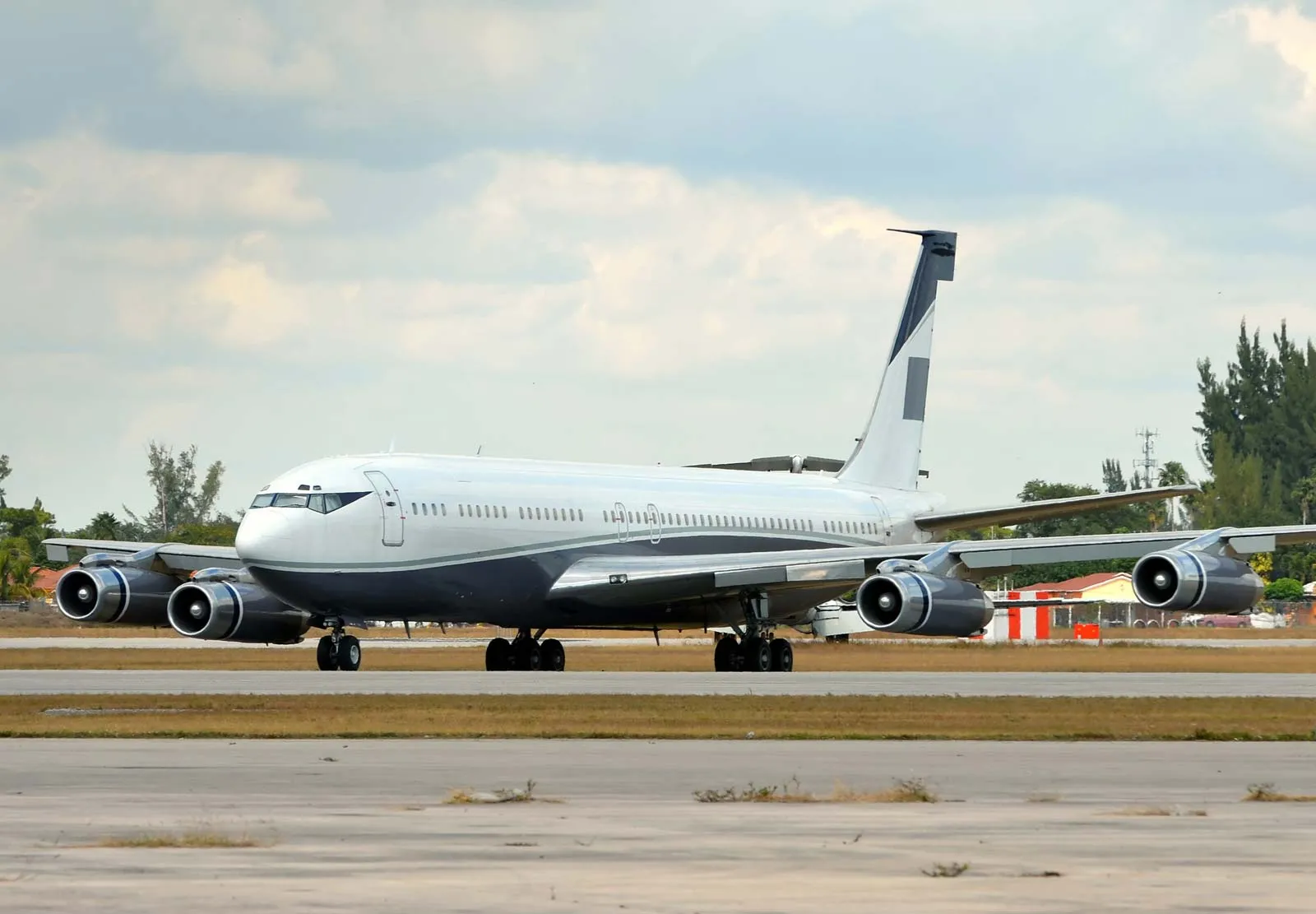
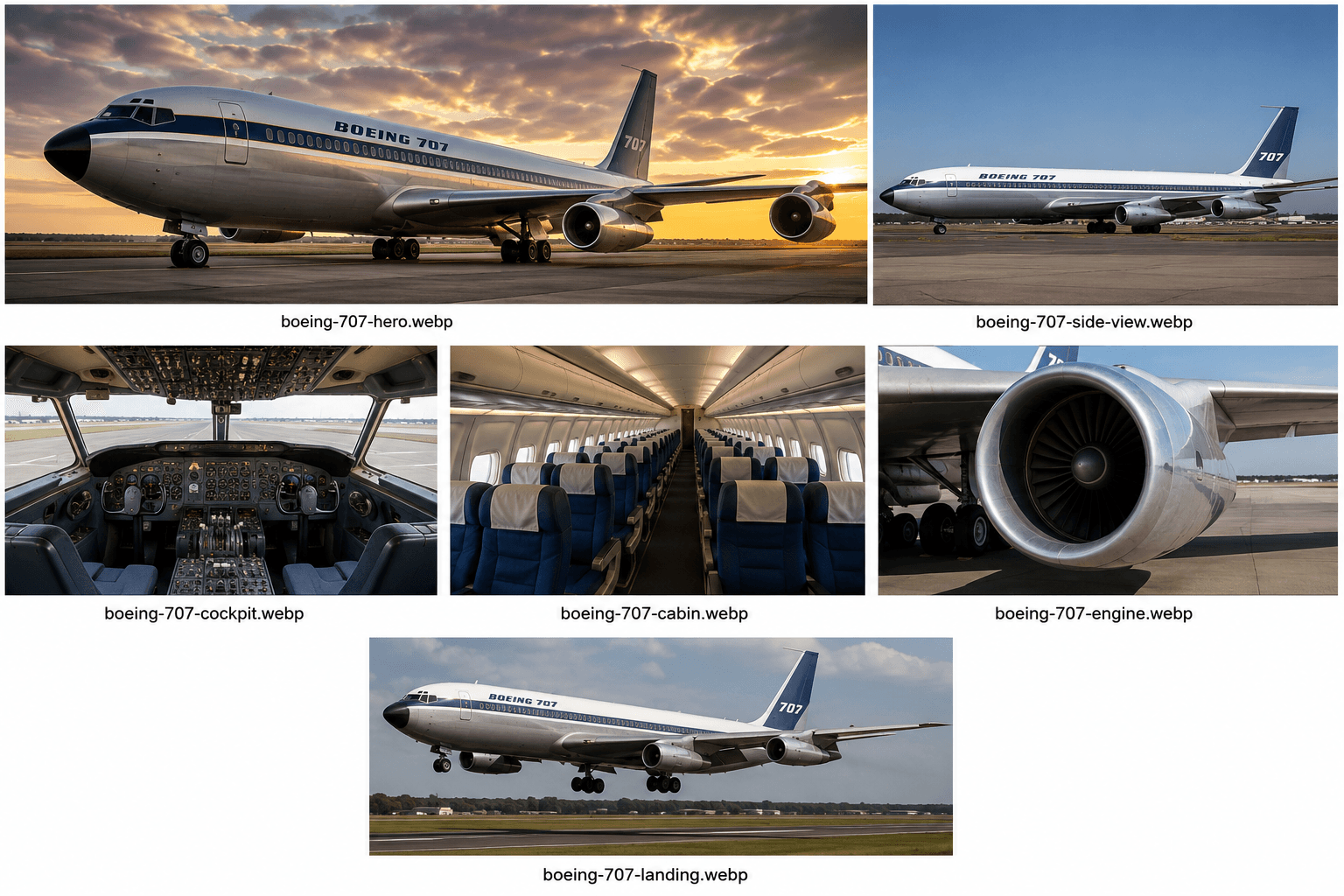
Boeing 707 side profile showing its swept-wing design. 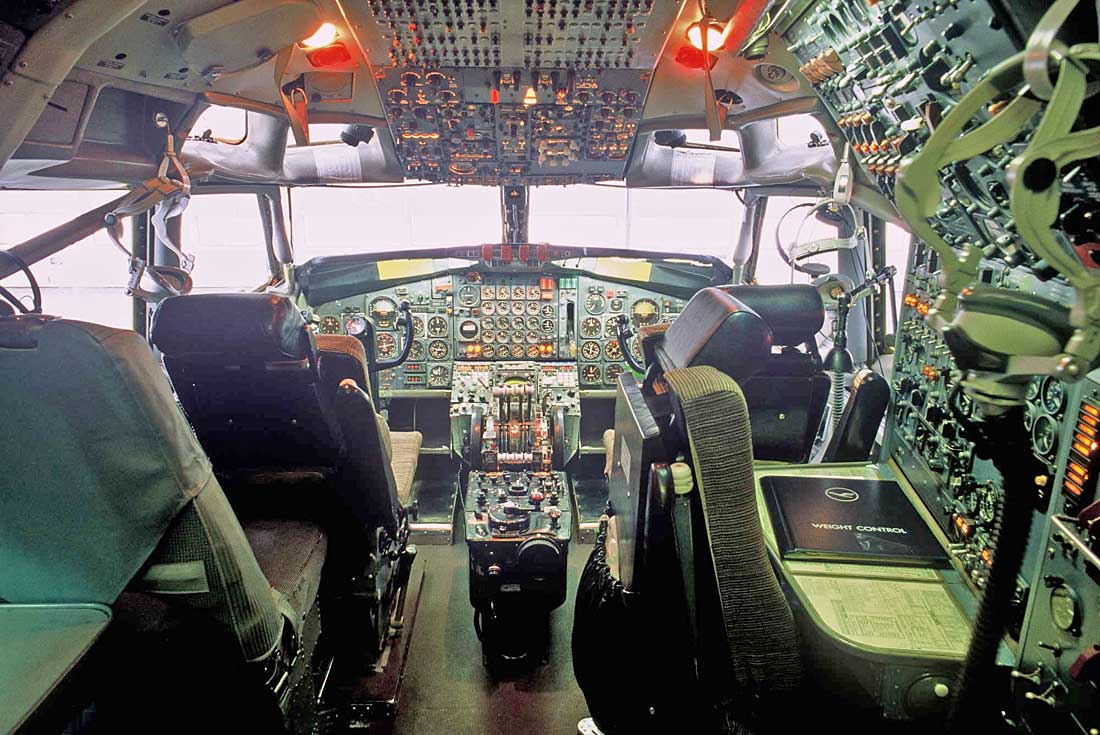
Classic Boeing 707 analog cockpit with Captain, First Officer and Flight Engineer stations. 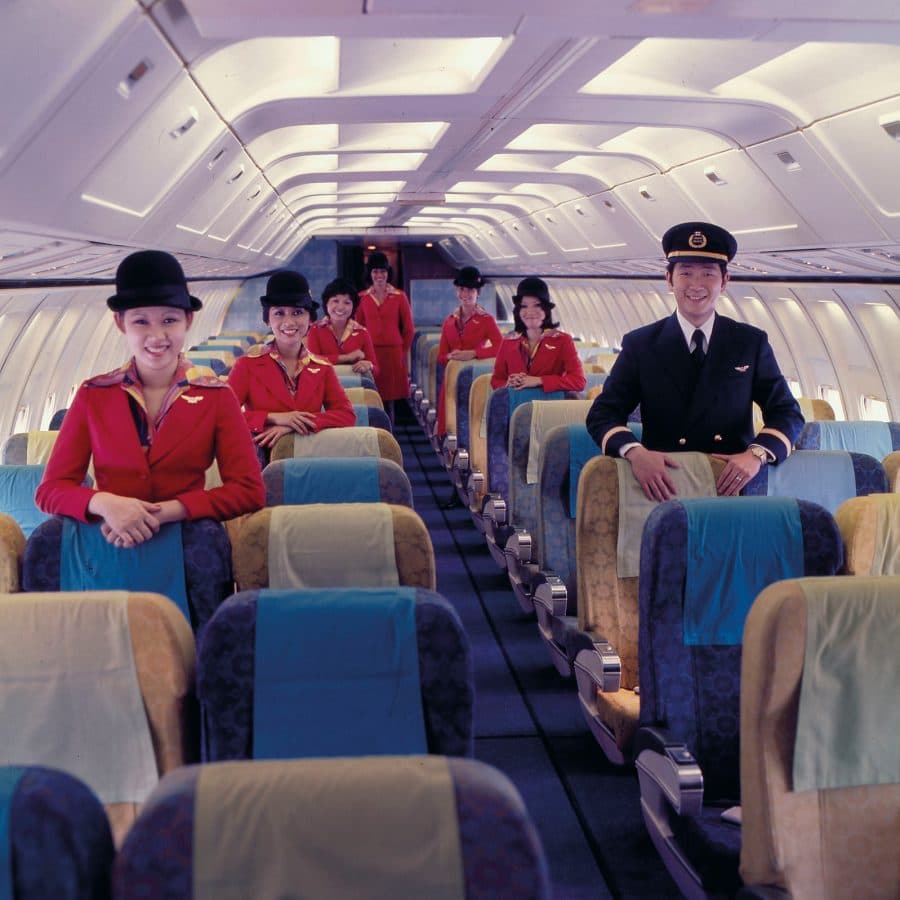
Typical passenger cabin layout of the Boeing 707. 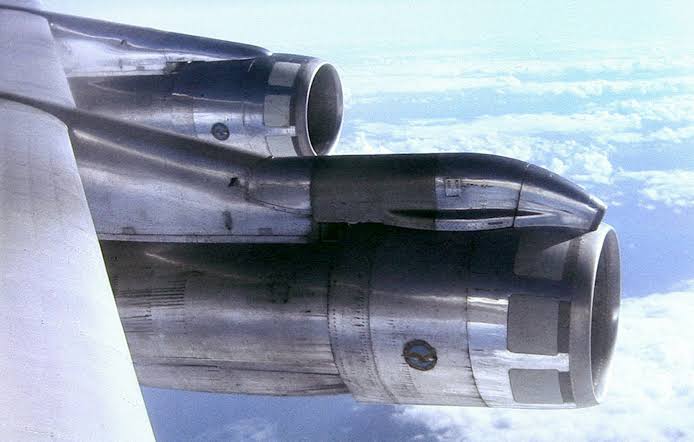
Pratt & Whitney JT3D turbofan engine installed on the Boeing 707. 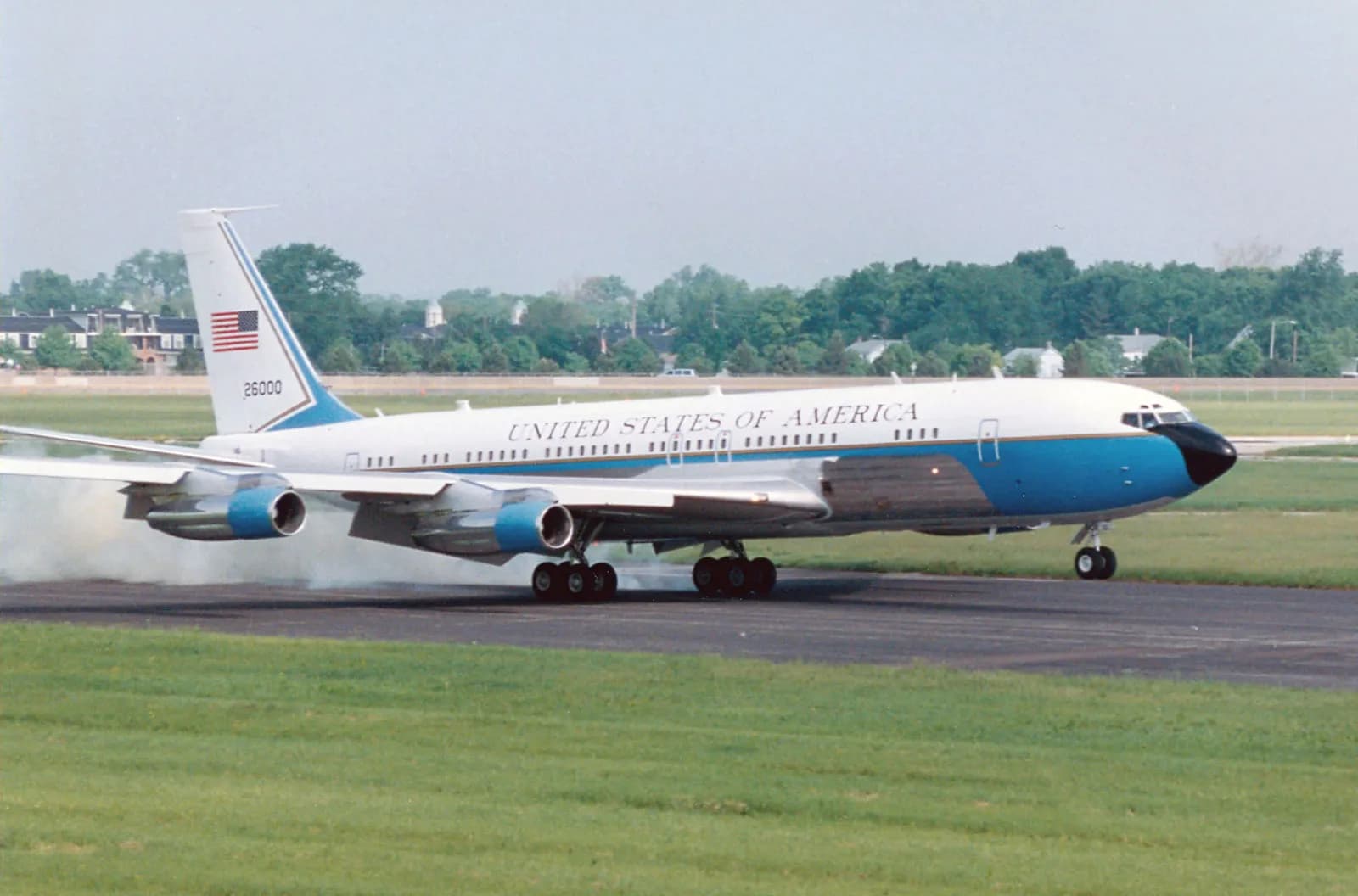
Boeing 707 during landing approach with landing gear deployed.
Videos
Boeing 707 Documentary
History of the Boeing 707
Boeing 707 Cockpit Tour
Frequently Asked Questions
Recommended Products
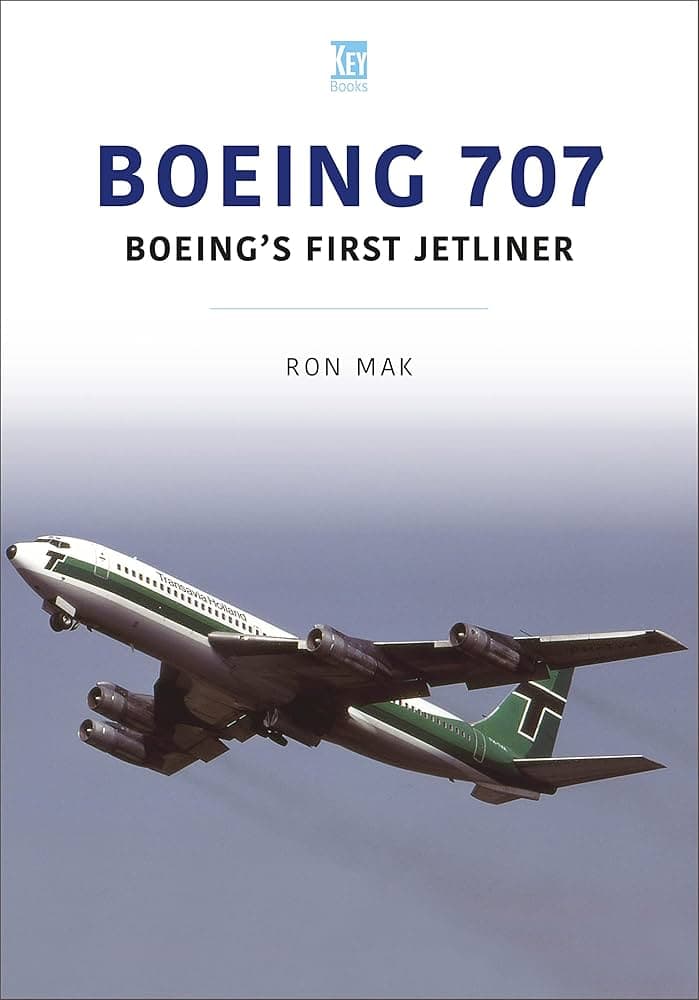
Boeing 707 History Book
Comprehensive reference covering the design, development and operational history of the Boeing 707.
Buy now
Commercial Aircraft Encyclopedia
A detailed guide covering classic and modern commercial aircraft.
Buy now


As an affiliate, A2Z InfoSight may earn from qualifying purchases.
References
Keep exploring


